Business & IT
Published:
1000BASE-T (Gigabit Ethernet - ギガビットイーサネット: Technical Specifications, twisted-pair cabling, backward compatibility, and upgrade paths)
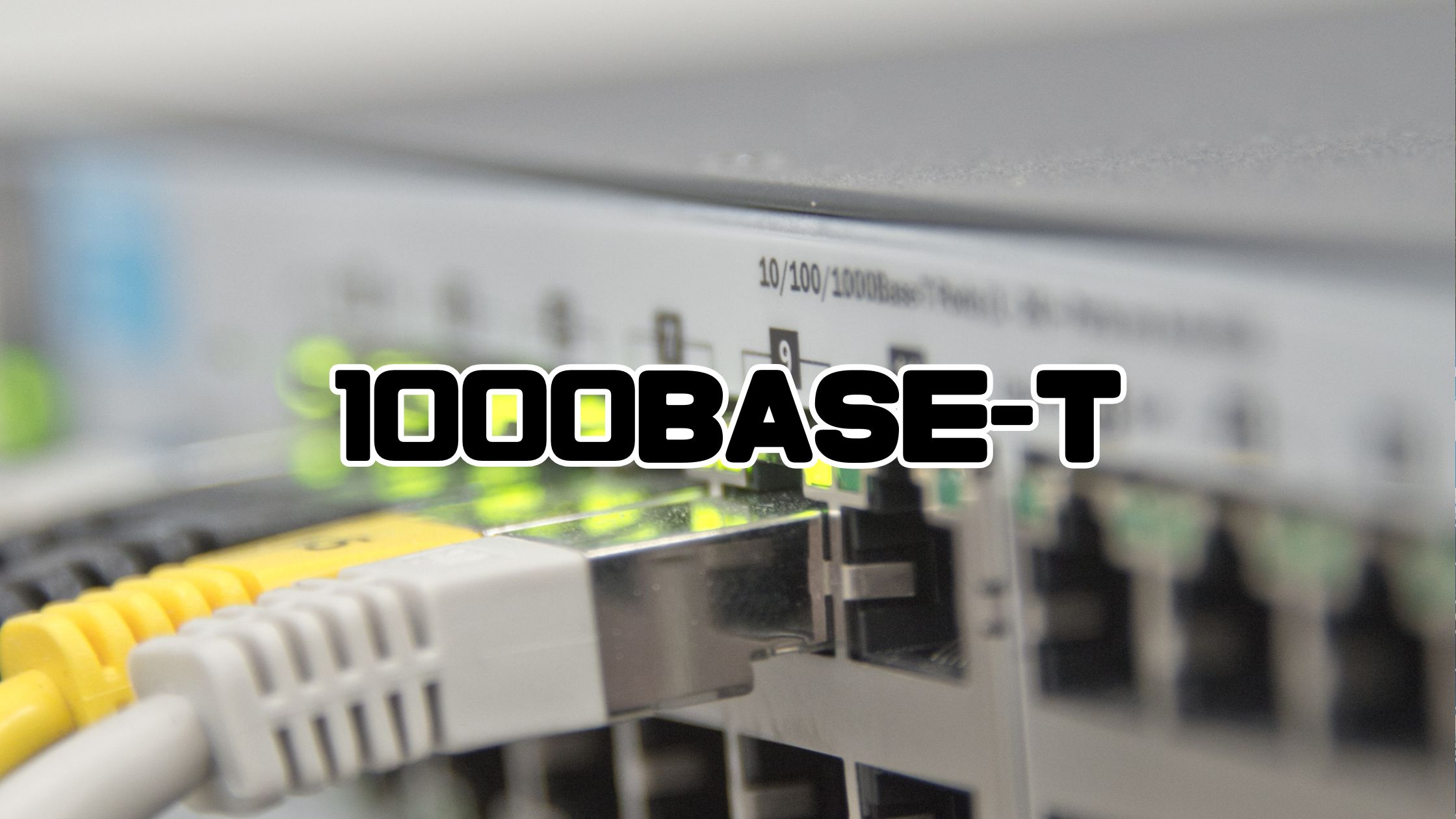
"1000BASE-T" (せんベースティー - Sen-Bēsu-Tī) is a standardized physical layer specification for wired local area networks (LANs) under the Ethernet family, designed to deliver maximum data transfer speeds of up to 1 Gigabit per second (1 Gbps) over copper twisted-pair cabling.
It is universally referred to as "Gigabit Ethernet".
Deconstructing the Term "1000BASE-T"
- 1000
Signifies the maximum transmission speed of 1000 Megabits per second (1000 Mbps), which equals 1 Gigabit per second (1 Gbps). - BASE
Represents Baseband transmission, a signaling method where digital data is transmitted directly as electrical pulses without carrier frequency modulation, using a single transmission channel over the cable. - T
Denotes the use of Twisted-pair cabling.
Twisted-pair cables consist of insulated copper wires twisted together in pairs, a physical design that effectively cancels out electromagnetic interference (EMI) and crosstalk from external sources.
Key Engineering Characteristics
- High-Speed Transmission
Supports rapid data transfer of up to 1 Gbps, facilitating smooth high-definition video streaming, heavy file transfers, and real-time cloud synchronization. - Reuse of Existing Infrastructure
Designed to operate over Category 5e (Cat 5e) or higher twisted-pair cabling. This allowed organizations to upgrade to gigabit speeds without replacing the existing copper cables deployed for older 100BASE-TX Fast Ethernet networks, provided the installation met quality guidelines. - Universal Compatibility
Virtually all modern networking hardware—including routers, switches, and network interface cards (NICs)—fully support 1000BASE-T, ensuring seamless plug-and-play integration. - Full-Duplex Operation
Supports full-duplex communication, allowing data to be transmitted and received simultaneously over separate wire pairs, effectively maximizing bandwidth efficiency.
Real-World Examples and Professional Dialogues
- "This network infrastructure fully supports 1000BASE-T."
Explaining that a local area network is capable of running at Gigabit Ethernet speeds. - "Please connect the device using a 1000BASE-T compliant LAN cable."
Instructing someone to use an appropriate twisted-pair cable (Cat5e/Cat6) to establish a gigabit connection. - "With a 1000BASE-T connection, high-definition video streaming is extremely smooth."
Highlighting the practical performance benefits of Gigabit Ethernet. - "Let's swap out this old switching hub for a model that supports 1000BASE-T."
Proposing a hardware upgrade to achieve gigabit performance across the network. - "The connection between the server and clients is established over 1000BASE-T."
Describing specific physical layer standards in a system architecture diagram. - "This PC's network interface supports auto-negotiation across 1000BASE-T, 100BASE-TX, and 10BASE-T."
Explaining that a network card is backward compatible with older Ethernet speeds.
Related Network Terminology
- 10BASE-T
The classic legacy Ethernet standard supporting maximum speeds of 10 Mbps over copper lines. - 100BASE-TX
Commonly known as Fast Ethernet, supporting maximum speeds of 100 Mbps. - Category 5e (Cat 5e) Cable
An enhanced copper twisted-pair cable specification optimized to support gigabit speeds by minimizing crosstalk. - Category 6 (Cat 6) Cable
A higher-grade cable standard featuring internal separators to reduce crosstalk, designed to support 1000BASE-T and up to 10GBASE-T over shorter distances. - Auto-Negotiation
A protocol that allows two connected devices to automatically share their speed and duplex capabilities to select the highest common performance mode.
Next-Generation Wavelengths and Higher Standards
- 10GBASE-T
Delivering 10 times the speed of Gigabit Ethernet, this standard achieves up to 10 Gbps over copper wiring. - 2.5GBASE-T / 5GBASE-T
Standardized multi-gigabit specifications that fill the gap between Gigabit and 10-Gigabit Ethernet, running over existing Cat 5e/Cat 6 cabling.
To sum up, "1000BASE-T" is a highly reliable Ethernet standard delivering speeds up to 1 Gbps over affordable twisted-pair copper cables.
Because of its high performance, backward compatibility, and low implementation cost, it remains the backbone of residential and commercial local networks today.
I hope this guide helps you solidify your understanding of the foundational 1000BASE-T standards in modern IT infrastructure!
Because of its high performance, backward compatibility, and low implementation cost, it remains the backbone of residential and commercial local networks today.
I hope this guide helps you solidify your understanding of the foundational 1000BASE-T standards in modern IT infrastructure!
About "1000BASE-T (Gigabit Ethernet - ギガビットイーサネット: Technical Specifications, twisted-pair cabling, backward compatibility, and upgrade paths)"
This page provides the English definition and usage guide for the professional term "1000BASE-T (Gigabit Ethernet - ギガビットイーサネット: Technical Specifications, twisted-pair cabling, backward compatibility, and upgrade paths)." If you have any suggestions, feedback, or corrections regarding our terminology articles, please feel free to reach out via our contact form.