Ethernet (イーサネット - Wired Local Area Network Standards, IEEE 802.3 Protocol Architecture, and Networking Hardware Components)
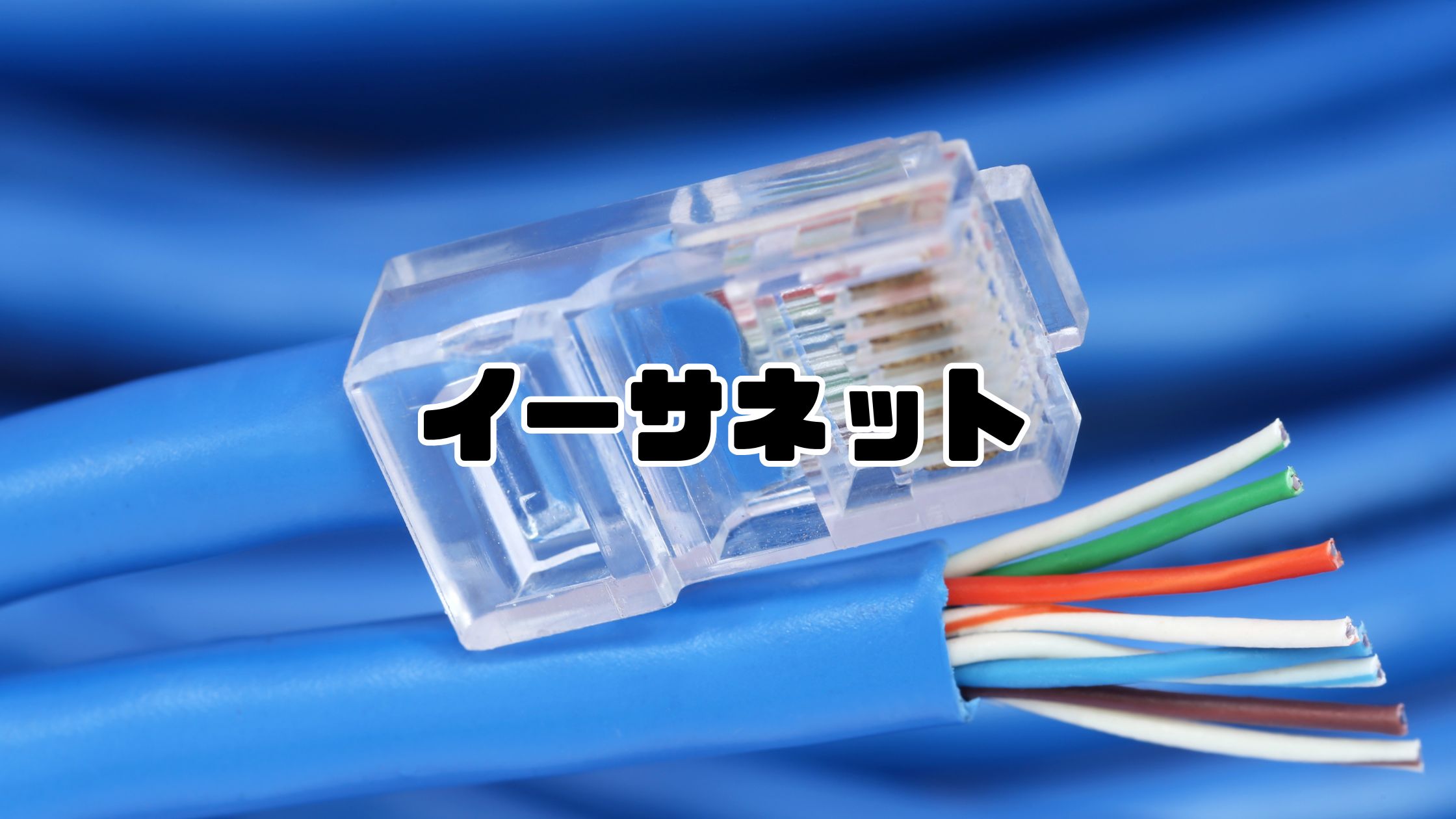
"Ethernet" (イーサネット) refers to the global standard family of wired computer networking technologies used to construct Local Area Networks (LANs).
First standardized by the IEEE under the 802.3 working group, it remains the most dominant wired LAN technology in the world, serving as the essential infrastructure for corporate offices, datacenters, and modern home networks.
Core Technical Characteristics of Ethernet
- International IEEE Standard: Governed by the Institute of Electrical and Electronics Engineers (IEEE), ensuring that the technology is uniformly adopted and implemented globally.
- Exceptional Cross-Vendor Compatibility: Guaranteed interoperability allows hardware from entirely different manufacturers to communicate seamlessly as long as they adhere to the IEEE 802.3 specifications.
- Scalable Transmission Speeds: Offers a wide array of standardized speeds—including 10 Mbps, 100 Mbps, 1 Gbps, and 10 Gbps—allowing networks to scale capacity based on operational demands.
- Highly Cost-Effective: Massive economies of scale ensure that Ethernet cables, transceivers, network interface cards (NICs), and switches remain exceptionally inexpensive compared to specialized telecom hardware.
- CSMA/CD Protocol (Historic Base): Classically utilizes Carrier Sense Multiple Access with Collision Detection (CSMA/CD) to manage and resolve data packet collisions when multiple devices share a single coaxial or hub network. (Note: In modern full-duplex networks using switching hubs, collisions are natively eliminated, making active CSMA/CD execution largely legacy.)
Core Hardware Components of an Ethernet Network
Building a functioning Ethernet network requires several key physical layer components:
- Transmission Cabling: The physical medium carrying the data. Commonly utilizes Copper Twisted Pair cables (Category 5e, 6, or 6A) for local connections, or Fiber Optic cables for high-speed, long-distance datacenter backbones.
- NIC (Network Interface Card): The physical hardware expansion card or integrated chipset on a computer motherboard that serves as the dedicated port to connect the device to the network cable.
- Repeater Hub (Legacy): A simple layer 1 device that broadcasted incoming signals to all connected ports without intelligence.
- Switching Hub (Network Switch): A smart layer 2 device that reads MAC addresses and routes data packets exclusively to the specific target device's port, optimizing bandwidth.
- Router: A layer 3 device that routes data packets between entirely different networks (e.g., connecting a local office LAN to the global public Internet).
Major IEEE 802.3 Ethernet Standards
Ethernet has evolved through several technical milestones, named based on speed, signaling type, and cable style:
- 10BASE-T: The historic standard offering 10 Mbps over twisted pair copper cables.
- 100BASE-TX (Fast Ethernet): Delivering 100 Mbps over twisted pair copper, serving as a long-term enterprise baseline.
- 1000BASE-T (Gigabit Ethernet): Offering 1 Gbps (1000 Mbps) over category 5e/6 copper cables, which remains the universal standard for modern local desktop connections.
- 10GBASE-T (10-Gigabit Ethernet): Delivering 10 Gbps over advanced Category 6A or 7 copper cabling, crucial for modern servers and high-speed storage networks.
- 1000BASE-X: Offering 1 Gbps transmission specifically utilizing fiber optic cables to span long distances between corporate facilities.
Practical Examples of the Term "Ethernet" in Business
- "Our entire corporate headquarters LAN is constructed using high-performance Gigabit Ethernet."
Used by network administrators to describe the technical architecture of the office local network. - "This new ultrabook requires a USB adapter because it does not feature a native Ethernet port."
Used when explaining physical device connection limits on modern slim laptops. - "Connect the laptop directly to the router using a Category 6 Ethernet cable to ensure stable bandwidth."
Used when troubleshooting network lag by swapping wireless connections for stable wired lines. - "Our newest server NIC supports the latest 10-Gigabit Ethernet standards for database replication."
Used when upgrading datacenter hardware to handle massive real-time data flows. - "We need to replace this outdated repeater hub with an Ethernet switching hub to optimize local bandwidth."
Used when resolving network packet congestion issues by upgrading network hardware. - "According to national telecom data, over 90% of high-speed household broadband lines in Japan terminate in an Ethernet connection."
Used when discussing broad infrastructure trends and the universal dominance of the standard.
Key Differences Between Ethernet and Wi-Fi
- Ethernet (Wired LAN): Requires physical copper or fiber optic cables. Offers superior security, absolute signal stability, near-zero latency, and maximum speed.
- Wi-Fi (Wireless LAN): Relies on high-frequency radio waves to transmit data through the air, providing unmatched device mobility and convenience, though vulnerable to physical wall interference and signal congestion.
By guaranteeing absolute cross-vendor compatibility, stable data throughput, and scaling speeds up to 10 Gbps and beyond, it remains an indispensable technology for global business.
Whether configuring a corporate server farm, setting up a home gaming rig, or upgrading a local office hub, understanding Ethernet standards is essential for all IT and business operations.
I hope this detailed technical guide helps you build and manage highly efficient, high-performance network infrastructures!
About "Ethernet (イーサネット - Wired Local Area Network Standards, IEEE 802.3 Protocol Architecture, and Networking Hardware Components)"
This page provides the English definition and usage guide for the professional term "Ethernet (イーサネット - Wired Local Area Network Standards, IEEE 802.3 Protocol Architecture, and Networking Hardware Components)." If you have any suggestions, feedback, or corrections regarding our terminology articles, please feel free to reach out via our contact form.