Evidence (エビデンス - Objective Proof, Corporate Accountability, IT System Logs, and Legal Audit Trails)
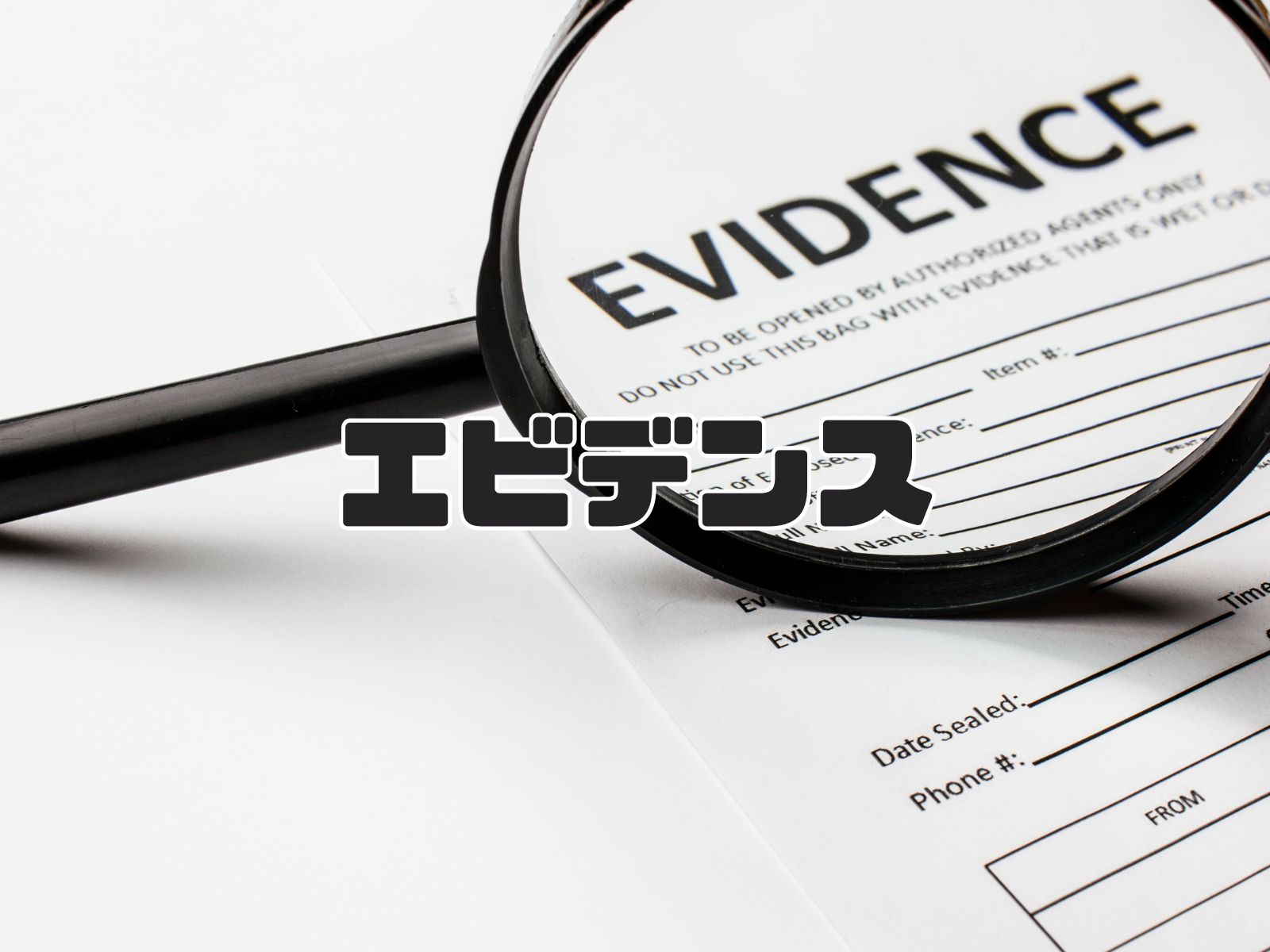
The term "Evidence" (エビデンス - Ebidensu) originates from the English noun meaning "proof," "factual basis," or "supporting validation."
In modern IT environments and professional corporate settings, it refers to objective data, records, or physical artifacts that conclusively prove a claim, confirm a successful system change, or validate an operational transaction.
Rather than relying on verbal agreements or subjective memory, professional standards require verifiable, immutable records or empirical data logs to establish truth.
Etymological Origins
The loanword "evidence" comes directly from the English noun "evidence."
This noun traces back to the Latin term evidentia (meaning "clear, obvious, or plainly visible"), signifying that a fact is backed by visible, undeniable proof.
Professional Contexts Requiring Meticulous Evidence
Capturing robust evidence is a mandatory operational requirement across multiple business and IT scenarios:
- Immutable Task and Operation Logging:
Documenting step-by-step technical procedures, system migrations, or database modifications for future reference. - Factual Decision-Making Bases:
Providing objective, data-driven metrics to justify corporate investments or product changes to board members. - Troubleshooting and Root-Cause Analysis:
Using detailed logs and screen captures to identify, trace, and debug complex system crashes or network failures. - Contractual and Legal Validation:
Preserving immutable proof of corporate agreements, client sign-offs, or licensing terms to prevent litigation. - Quality Assurance (QA) and Compliance:
Using structured test logs and metrics to prove that a product satisfies strict industry safety and performance criteria. - Formal Reporting and Stakeholder Alignment:
Presenting verified data to clients, executives, or external auditors to demonstrate successful project milestones. - Regulatory and Compliance Audits:
Providing absolute proof that business operations comply with corporate governance policies, ISO standards, or financial laws (such as SOX).
Common Formats of Professional Evidence
Depending on the technical context, evidence is captured and stored in several distinct formats:
- Structured Documents:
Formal meeting minutes (gijiroku), detailed system blueprints, technical specifications, legal contracts, and email threads. - System and Diagnostic Data:
Automated unit test reports, application log files, database transaction logs, and firewall access records. - Visual Assets:
High-resolution screen captures showing successful states, physical hardware photos, and diagnostic diagrams. - Audio Recordings:
Recorded conference calls or stakeholder meetings confirming oral agreements. - Video Records:
Screen-recorded walkthroughs of software actions or step-by-step hardware assembly footage.
Practical Industry Use-Cases
1. Everyday Corporate Business Scenes
- Meeting Minutes (Gijiroku): The official, written record of corporate decisions and assigned tasks.
- SLA Contracts: Signed agreements outlining the legal boundaries of service delivery.
- Email Correspondences: Saved mail logs confirming client approvals for project changes.
- Progress Reports: Verified milestone metrics submitted to corporate stakeholders.
- Customer Surveys: Quantified data measuring customer satisfaction levels.
2. Technical IT and Software Engineering
- QA Test Reports: Comprehensive test suites demonstrating successful code coverage and zero bugs.
- System Log Files: Automated logs capturing background server activities and API requests.
- Before-and-After Screen Captures: Visual screenshots proving a bug has been resolved or a UI has been updated.
- Database State Records: Captured database snapshots showing successful transaction writes.
- Git Version Control History: Immutable change logs showing exactly who modified the code and when.
Key Considerations and Best Practices for Evidence Capture
-
Avoid Over-Documentation and Overhead:
- Attempting to capture evidence for minor tasks can slow down team speed and decrease operational efficiency.
- Engineers must strategically define high-priority triggers for evidence capture while automating low-risk logs.
-
Strict Security and Data Privacy Compliance:
- If screenshots or log files contain Personally Identifiable Information (PII) or company secrets, mask or encrypt them.
- Implement strict role-based access control (RBAC) to ensure only authorized auditors can view sensitive evidence.
-
Recognize that Evidence is a Support Tool:
- Evidence is designed to support human judgment and verify processes, not replace logical thinking.
- Teams must maintain high flexibility, responding dynamically to real-world situations instead of hiding behind static paperwork.
Corporate Governance and Accountability
- Accountability (説明責任):
Robust, verified evidence is the primary tool used by executives and managers to fulfill their fiduciary duties to shareholders and clients. - Internal Control (内部統制):
A systematic framework to ensure compliance. Capturing structured evidence ensures that corporate policies are being executed correctly. - Audits (監査):
Independent third-party evaluations. Secure audit trails are the single most critical asset examined during corporate or financial audits.
Future Technological Horizons in Evidence Management
- Blockchain Ledger Technology:
Leveraged to create tamper-proof, immutable audit trails for critical business transactions and legal contracts. - AI-Driven Log Analysis:
Integrating LLMs and machine learning to scan massive log databases, automatically extracting relevant evidence during system failures.
Practical Examples of "Evidence" in Corporate Dialogue
- "Please ensure you capture and save the evidence before executing this production database migration."
Instructing an engineer to document the database state before starting a deployment. - "After reviewing the server logs as evidence, we successfully traced the system outage to a memory leak."
Using technical data to identify and resolve a system bug. - "We need the client to present clear, written evidence of the requested feature changes before we begin coding."
Demanding verified documentation to prevent scope creep. - "I will attach the post-patch test screen captures as evidence of a successful bug fix."
Confirming that a visual screenshot is being uploaded to prove a code update is complete. - "All critical project decisions must be backed by meeting minutes to serve as official corporate evidence."
Ensuring all boardroom agreements are archived as legal proof. - "Our team keeps our email history archived as evidence in case any contractual disputes emerge."
Preserving correspondence records to protect the firm from potential disputes.
Five Pillars of High-Quality Evidence
- Accuracy: The data must be completely true, unmanipulated, and free from error.
- Objectivity: Records must focus strictly on empirical facts, avoiding personal opinions or guesses.
- Comprehensiveness: The evidence must capture all relevant metrics, timestamps, and parameters.
- Secure Storage: Evidence must be stored in centralized, read-only archives with automatic backups.
- Confidentiality: Protected files must be shielded from unauthorized access or external data leaks.
Closely Related Professional Concepts
- Traceability (トレーサビリティ): The capacity to trace the entire history, application, or location of an asset or decision.
- System Log (ログ): An automatically generated, time-stamped record of events occurring within a computer system.
- Audit Trail (監査証跡): A chronological record of system activities that provides documentary evidence of transaction sequences.
- Compliance (コンプライアンス): The act of conforming to official laws, regulations, and internal company policies.
By automating log captures, securing visual screen captures, and preserving clear audit trails, we protect our teams from communication errors, minimize downtime, and prove compliance to stakeholders.
I hope this detailed guide helps you establish highly reliable, secure, and professional evidence management practices in your organization!
About "Evidence (エビデンス - Objective Proof, Corporate Accountability, IT System Logs, and Legal Audit Trails)"
This page provides the English definition and usage guide for the professional term "Evidence (エビデンス - Objective Proof, Corporate Accountability, IT System Logs, and Legal Audit Trails)." If you have any suggestions, feedback, or corrections regarding our terminology articles, please feel free to reach out via our contact form.