Noppiki-naranai (のっぴきならない - Noppiki-naranai: Japanese idiom for unavoidable circumstances, etymology, and formal business templates)
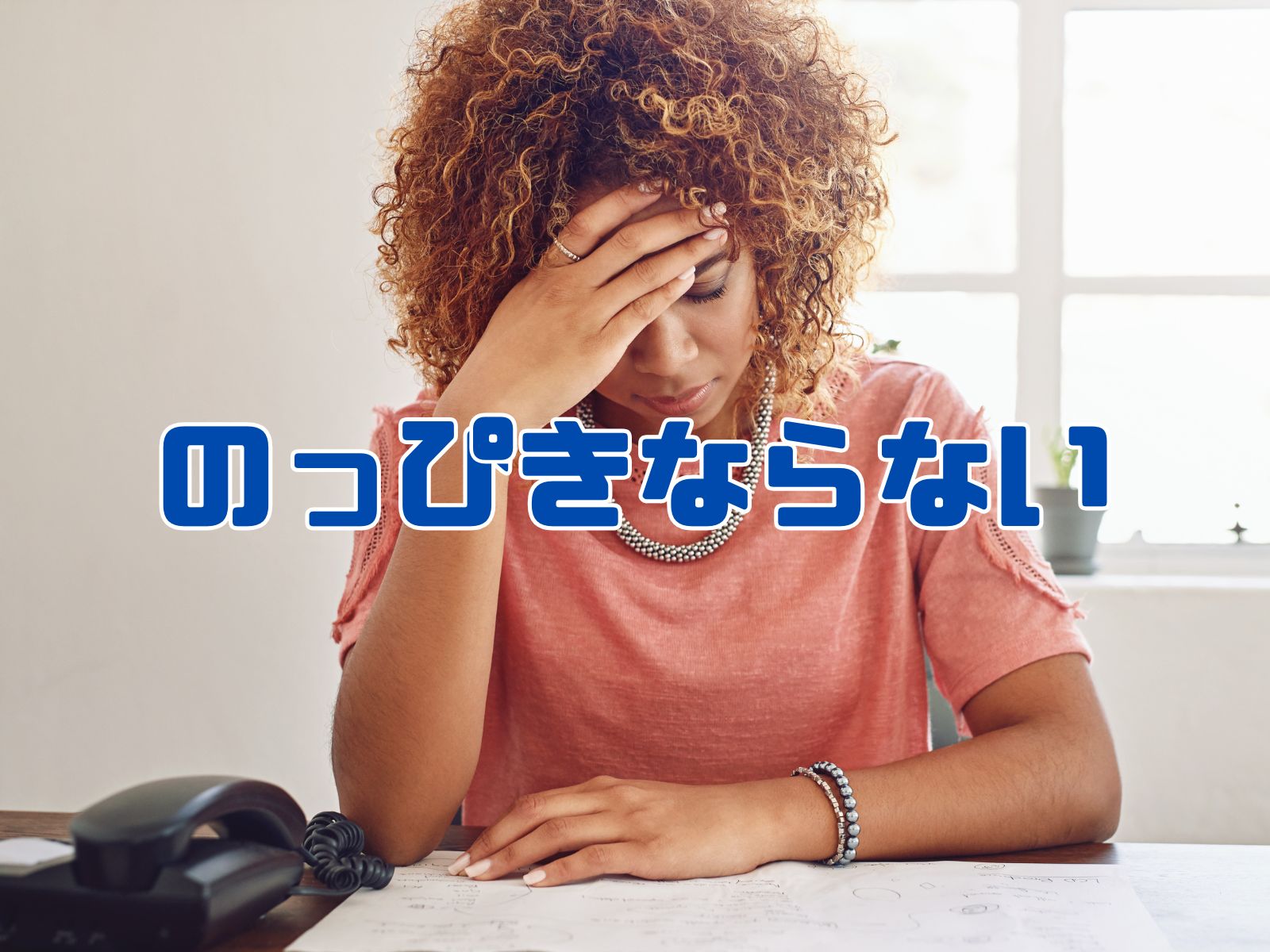
The Definition of "Noppiki-naranai"
The Japanese idiom "Noppiki-naranai" (のっぴきならない) is used to describe a state of being "completely trapped," "backed into a tight corner," "unable to retreat or avoid," or "facing absolutely unavoidable circumstances."
It is deployed to represent a highly challenging, deadlocked scenario where an individual or organization is forced to face a difficult situation without any possible escape route.
Etymology and Origins
"Noppiki-naranai" is a phonetic mutation of the classical Japanese word "Noki-hiki" (退き引き - meaning to retreat and pull back).
In classical grammar, "Noki" (退く - to withdraw/retreat) and "Hiki" (引く - to pull back/escape) both symbolize escaping a dangerous situation. Combining these actions with the negative suffix "naranai" (cannot become) yields a literal meaning of "retreating and escaping is physically or logically impossible." Over time, this concept evolved into a popular idiom denoting a situation where nothing can be done to avoid the immediate outcome.
Synonyms and Antonyms
Key Synonyms
Several closely related Japanese idioms share the conceptual space of "Noppiki-naranai," each featuring a distinct nuance:
- Nukisashi-naranai (抜き差しならない)
Literally meaning "unable to insert or extract," it describes a situation that has already set in motion and cannot be paused, modified, or canceled. It is applied to physical lockups or deep, chronic situations where one cannot pull out. - Shintai-kiwamaru (進退窮まる)
Literally meaning "unable to advance or retreat," it describes a complete deadlock where whichever action one takes, the situation fails to improve. It is used to express a state of being utterly stuck. - Zettai-zetsumei (絶体絶命)
Refers to an extreme, desperate crisis where there is almost zero hope of survival or recovery. It represents life-or-death emergencies or extreme threats to social survival. - Banji-kyusu (万事休す)
Meaning "all is lost" or "nothing more can be done." It represents reaching a state of absolute resignation where all options are exhausted. - Happo-basagari (八方塞がり)
Literally meaning "all eight directions are blocked," it indicates that whichever path one tries to take, a major obstacle stands in the way, leaving zero room for troubleshooting.
While these expressions overlap significantly in describing extreme hardship, choosing the correct phrase based on the source of the difficulty (logical deadlock, physical danger, or lack of options) displays a refined command of the Japanese language.
Antonyms and Opposing Nuances
While there is no single direct antonym for the word, phrases that represent a turnaround or finding a solution serve as the opposite concept. Expressions like "Kaikesu no michi ga hirakeru" (a path to a solution opens up) or "Koumyou ga mieru" (a ray of hope becomes visible) represent the relief of escaping a "Noppiki-naranai" deadlock.
Common Real-World Examples
The idiom is utilized across several standard collocations in professional Japanese life:
| Collocation | Polite Sentence Examples |
|---|---|
| Noppiki-naranai Kankei (のっぴきならない関係) | 二人の関係は、もはやのっぴきならないものになっていた。 (The relationship between the two had reached a point of absolute entanglement where neither could pull back.) |
| Noppiki-naranai Jijo (のっぴきならない事情) | 申し訳ありませんが、本日はのっぴきならない事情で欠席させていただきます。 (I deeply apologize, but due to unavoidable and pressing circumstances, I must absent myself today.) |
| Noppiki-naranai Tachiba (のっぴきならない立場) | 彼は会社の代表として、のっぴきならない立場に立たされている。 (As the representative of the corporation, he is placed in a highly tight, unavoidable corner.) |
| Noppiki-naranai Jokyo (のっぴきならない状況) | 資金繰りが悪化し、会社はのっぴきならない状況に陥っている。 (Due to deteriorating cash flow, the enterprise has fallen into a severe, deadlocked financial situation.) |
Modern Social Context and Usage
"Noppiki-naranai" remains actively utilized in modern professional life.
It is highly valuable in business and formal correspondence (such as emails explaining a sudden absence, scheduling changes, or project delays) because it politely signals that the reason is absolutely serious and unavoidable, without requiring the writer to share uncomfortable personal details.
However, because of its formal and slightly archaic origin, using it in casual, daily conversations with close friends can sound overly stiff. In casual settings, it is far more natural to use softer expressions like "Taihen da" (it's tough) or "Dou shiyou mo nai" (there's nothing I can do).
Summary
"Noppiki-naranai" is a classic, highly expressive Japanese idiom denoting a state of being completely locked into an unavoidable situation. Evolving from the theater and lifestyle term "Noki-hiki," it remains a key vocabulary asset in business communication today.
Because the etymology implies that "escaping and withdrawing" are impossible, the term carries a mature nuance of accepting the difficult reality and taking responsibility for the next steps.
By mastering it alongside synonyms like "Nukisashi-naranai" or "Shintai-kiwamaru," professionals can precisely convey the exact scale, urgency, and formal nature of their commercial challenges.
About "Noppiki-naranai (のっぴきならない - Noppiki-naranai: Japanese idiom for unavoidable circumstances, etymology, and formal business templates)"
This page provides the English definition and usage guide for the professional term "Noppiki-naranai (のっぴきならない - Noppiki-naranai: Japanese idiom for unavoidable circumstances, etymology, and formal business templates)." If you have any suggestions, feedback, or corrections regarding our terminology articles, please feel free to reach out via our contact form.