Meta-Travel (メタトラベル - Meta-Travel: Definition, virtual reality tech, consumer travel cases, and future metaverse market)
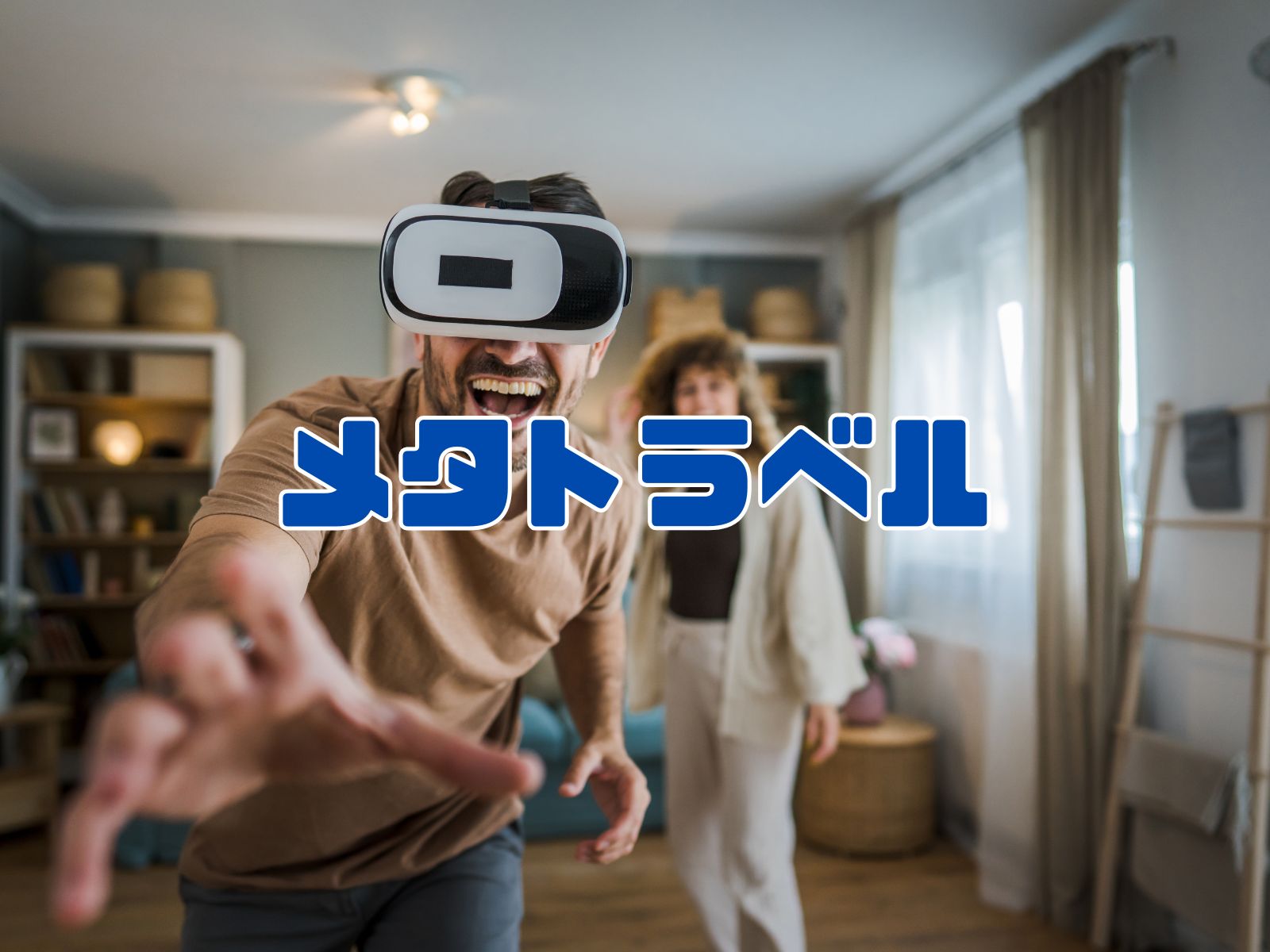
In tandem with the rapid global rise of the Metaverse, "Meta-Travel" (メタトラベル - Meta-toraberu) has emerged as a highly promising digital frontier.
By deploying cutting-edge Spatial Computing, Virtual Reality (VR), and Augmented Reality (AR) technologies, Meta-Travel allows consumers to enjoy immersive, highly realistic travel experiences across the globe right from the comfort of their living rooms.
Operational Definition of Meta-Travel
Meta-Travel is the technological practice of enabling highly realistic, immersive travel and tourism experiences within 3D virtual spaces. By transcending geographical distances, physical limitations, financial hurdles, and time constraints, it offers a revolutionary new paradigm for modern leisure.
Users can explore meticulously rendered historical sites, participate in local cultural festivities, purchase real-world regional crafts, and socialize with global travelers within shared virtual worlds.
The Association for Promotion of Meta-Tourism in Japan defines modern tourism as "the consumption of information." This asserts that travelers do not merely consume physical sights and food, but are actively consuming the layered historical, media, and cultural datasets attached to a location.
Meta-Travel leverages this model, enriching the virtual experience by overlaying diverse contextual databases. For example, when a user visits a virtual castle, the platform serves not only historical data, but also highlights anime, films, or pop-culture dramas filmed at that spot, dramatically boosting the traveler's creative engagement.
Understanding the Metaverse
To fully comprehend Meta-Travel, one must explore the foundational concept of the "Metaverse"—a portmanteau blending "meta" (transcending) and "universe." It designates a persistent, shared 3D virtual environment where users interact, play, work, and trade as customized digital avatars.
Going far beyond standard online video games, the Metaverse serves as a highly complex extension of our physical lives. Legendary venture capitalist Matthew Ball outlines seven crucial criteria that define a true Metaverse:
- Persistence: The virtual world never resets, pauses, or ends; it continues running indefinitely in real-time.
- Synchronicity: All events are shared and experienced in real-time by participants, much like real-world live events.
- Interoperability: Virtual assets, data, and skins can be seamlessly moved across entirely different platforms and digital worlds.
- Avatar Representation: Users possess distinct, highly customizable digital identities to express themselves.
- High Immersive Dwell: Providing high sensory immersion, making users feel genuinely present inside the virtual environment.
- Fully Functioning Economy: Users and businesses can create, buy, sell, own, and invest in virtual goods and services.
- Social Fabric: Fosters genuine human socializing, allowing groups to build active, self-sustaining virtual communities.
By satisfying these criteria, the Metaverse operates as a stellar canvas for expanding human creativity and exploring virtual travel experiences.
Core Enabling Technologies
Meta-Travel is structurally powered by two primary technological pillars: Virtual Reality (VR) and Augmented Reality (AR).
VR utilizes head-mounted displays to fully immerse users' visual and auditory senses in a computer-generated 3D environment.
Conversely, AR projects virtual digital elements onto the user's view of the physical world, augmenting their real environment. Meta-Travel beautifully merges these technologies, utilizing VR to create fully virtual destinations, and deploying AR to enhance physical travel walks with layered digital data.
Virtual Reality (VR)
VR utilizes advanced 3D rendering and sound-spatialization to build artificial virtual spaces that feel incredibly real to the human brain. When a user wears a headset (like Meta Quest), the display tracks their head movements in real-time to adjust their 360-degree vision, creating a powerful sense of actual presence.
In Meta-Travel, this allows adventurers to safely and easily scale the icy peaks of Mount Everest or navigate the dense margins of the Amazon rainforest without any physical hazards or costly flights.
Augmented Reality (AR)
AR overlays commercial graphics, translated text, or historical videos directly onto the user's real-time physical surroundings, standardly viewed through smartphones, tablets, or smart glasses.
In transit tourism, AR serves as a highly practical utility. When strolling through an ancient city, holding up your phone instantly displays local restaurant reviews, historic building details, or overlay 3D animations showing what the ancient ruins looked like thousands of years ago.
Stellar Real-World Case Studies
Meta-Travel is rapidly transitioning from a high-tech concept into practical commercial services. Key examples include:
-
Metaverse Tourism Platforms:
- "Virtual Okinawa" (developed by Ashibi Company) offers a highly realistic VR recreation of Okinawa's famous international shopping street (Kokusai-dori), sandy beaches, and Shuri Castle. Users can shop for authentic Okinawan foods, learn local history, and purchase real-world regional specialties shipped directly to their homes.
- "Virtual Akihabara" (developed by DNP) recreates Tokyo's famous anime and electronics hub in high-detail 3D. Users can participate in massive gaming conventions, visit virtual maid cafes, and purchase exclusive digital merchandise alongside global anime fans.
- In a pioneering pilot project by Japan's Ministry of Land, Infrastructure, Transport and Tourism (MLIT), passengers on actual tour buses wore VR headsets that synced virtual scenery changes with the physical movement and vibrations of the bus, creating a highly realistic mixed-reality travel ride.
-
Immersive Travel Content:
- The customized "Travel Mode" on Meta Quest 2 and 3 headsets isolates spatial tracking from the speed of commercial aircraft, allowing passengers to comfortably watch movies on massive virtual screens, play high-end games, or practice relaxing spatial meditations while in flight.
リンク
- Lufthansa German Airlines partnered with Meta to provide Quest 3 headsets to business class travelers on select routes, offering a curated menu of spatial movies, virtual workouts, and wellness travel landscapes.
- "National Geographic Explore VR" allows users to embark on virtual expeditions to historical and ecological wonders like Antarctica or Machu Picchu, making them feel like the lead scientist in a real-world documentary.
- "BRINK Traveler" serves photogrammetry-scanned 3D natural wonders (grand canyons, pristine waterfalls, and arches), providing outstanding stress relief and virtual hiking tours.
- The customized "Travel Mode" on Meta Quest 2 and 3 headsets isolates spatial tracking from the speed of commercial aircraft, allowing passengers to comfortably watch movies on massive virtual screens, play high-end games, or practice relaxing spatial meditations while in flight.
-
Travel Meta-Search Engines (メタサーチ):
- Platforms like Trivago, TripAdvisor, and regional Japanese portals like Travelko or LINE Travel operate as powerful "meta-search engines" that aggregate, compile, and compare flight and hotel pricing across hundreds of booking platforms, helping travelers secure the best possible consumer deals.
-
Educational Applications:
- Major travel agency JTB actively sponsors "Virtual School Trips" (バーチャル修学旅行) for schools. Students wear VR headsets in their classrooms to take educational tours of Nara or Kyoto's temples, eliminating travel costs and safety worries while providing high academic value.
- "Google Earth VR" lets users fly over any city or natural monument on earth, enjoying high-resolution 3D satellite imagery and photorealistic 360-degree street views.
Key Advantages of Meta-Travel
Meta-Travel delivers several outstanding benefits compared to standard tourism:
- Zero Spatio-Temporal Friction:
Allows busy professionals to take instant, refreshing micro-vacations at any time of day, completely unaffected by flight delays, bad weather, or seasonal closures. - Exceptional Accessibility:
Enables elderly individuals, people with physical disabilities, or low-income families to experience the deep joy of visiting global wonders without physical or financial barriers. - Safe, Limitless Adventures:
Allows travelers to experience extreme, high-risk scenarios (such as walking on a Martian crater or diving deep with blue whales) in absolute safety. - Driving Real-World Sourcing:
Serving as a virtual teaser, exploring a beautifully rendered digital destination frequently inspires users to book actual tickets to visit the real-world location. - Reinvigorating Local Economies:
Enables remote towns to host massive virtual festivals, sell their unique sake or crafts globally, and build entirely new digital revenue streams. - Minimal Carbon Footprint:
Saves tons of aviation fuel emissions, aligning beautifully with global ESG (Environmental, Social, and Governance) targets for sustainable tourism.
Current Drawbacks and Constraints
Despite its high potential, Meta-Travel must overcome several technical and operational hurdles:
- High Initial Development Costs:
Building high-fidelity 3D assets, securing spatial computing servers, and creating custom interactive environments require substantial upfront investment and regular maintenance. - Hardware and Health Barriers:
Experiencing immersive VR can cause motion sickness or eye strain for certain users. Furthermore, replicating fine sensory elements—like feeling a sea breeze, smelling fresh forest pines, or enjoying local foods—remains currently out of reach for consumer devices. - Risks of Real-World Disconnect:
Over-reliance on virtual worlds can lead to social isolation, requiring users to balance digital exploration with real-life outdoor activity. - Uncharted Legal Frameworks: Intellectual property rights over virtual recreations of real landmarks, and transactional rules for virtual commerce, remain highly complex and underspecified.
Market Sizing and Future Outlook
As hardware prices fall and AI-driven 3D generation accelerates, Meta-Travel is set for explosive growth. Telemetry and graphics breakthroughs will soon make virtual travel indistinguishable from physical reality.
According to market research by Yano Research Institute, the Japanese Metaverse market, valued at 137.7 billion JPY in fiscal year 2022, is projected to scale beyond 2 trillion JPY by fiscal year 2027, driven by consumer adoption. Meta-Travel is expected to serve as a major engine of this expansion.
Furthermore, the integration of generative AI will enable hyper-personalized travel blockings. AI travel companions will analyze your historical preferences and mood to dynamically build custom, dream-like itineraries in real-time.
Major travel operators are investing heavily: ANA (All Nippon Airways) is constructing dedicated virtual travel hubs, while standard agencies are pivoting to offer mixed-reality corporate retreats. Tech upgrades, such as Meta's pass-through improvements and spatial video tools, will continue to accelerate this digital shift.
Conclusion
Meta-Travel represents a brilliant convergence of spatial computing, tourism, and community-building. By unlocking the world to everyone, it serves as a powerful symbol of inclusive, sustainable hospitality.
While developers must continue to refine hardware safety and establish clear legal frameworks, balancing virtual convenience with the wonders of the physical world will ensure a highly enriching future for global exploration. I hope this technical guide inspires you to take your next, magnificent virtual flight!
By allowing users to comfortably bypass time, space, and physical limitations to explore virtual replicas of Okinawa or flight simulations, it stands as a brilliant asset for modern travel businesses.
Just remember to pair your virtual flights with real-world exploration to ensure a highly balanced, healthy lifestyle!
I hope this spatial computing guide inspires you to take an amazing virtual journey!
About "Meta-Travel (メタトラベル - Meta-Travel: Definition, virtual reality tech, consumer travel cases, and future metaverse market)"
This page provides the English definition and usage guide for the professional term "Meta-Travel (メタトラベル - Meta-Travel: Definition, virtual reality tech, consumer travel cases, and future metaverse market)." If you have any suggestions, feedback, or corrections regarding our terminology articles, please feel free to reach out via our contact form.