Kinsei Mononohon Edo Sakusha Burui (近世物之本江戸作者部類 - Kyokutei Bakin's Biographies of Edo Gesaku Authors and Feudal Literary Criticism)
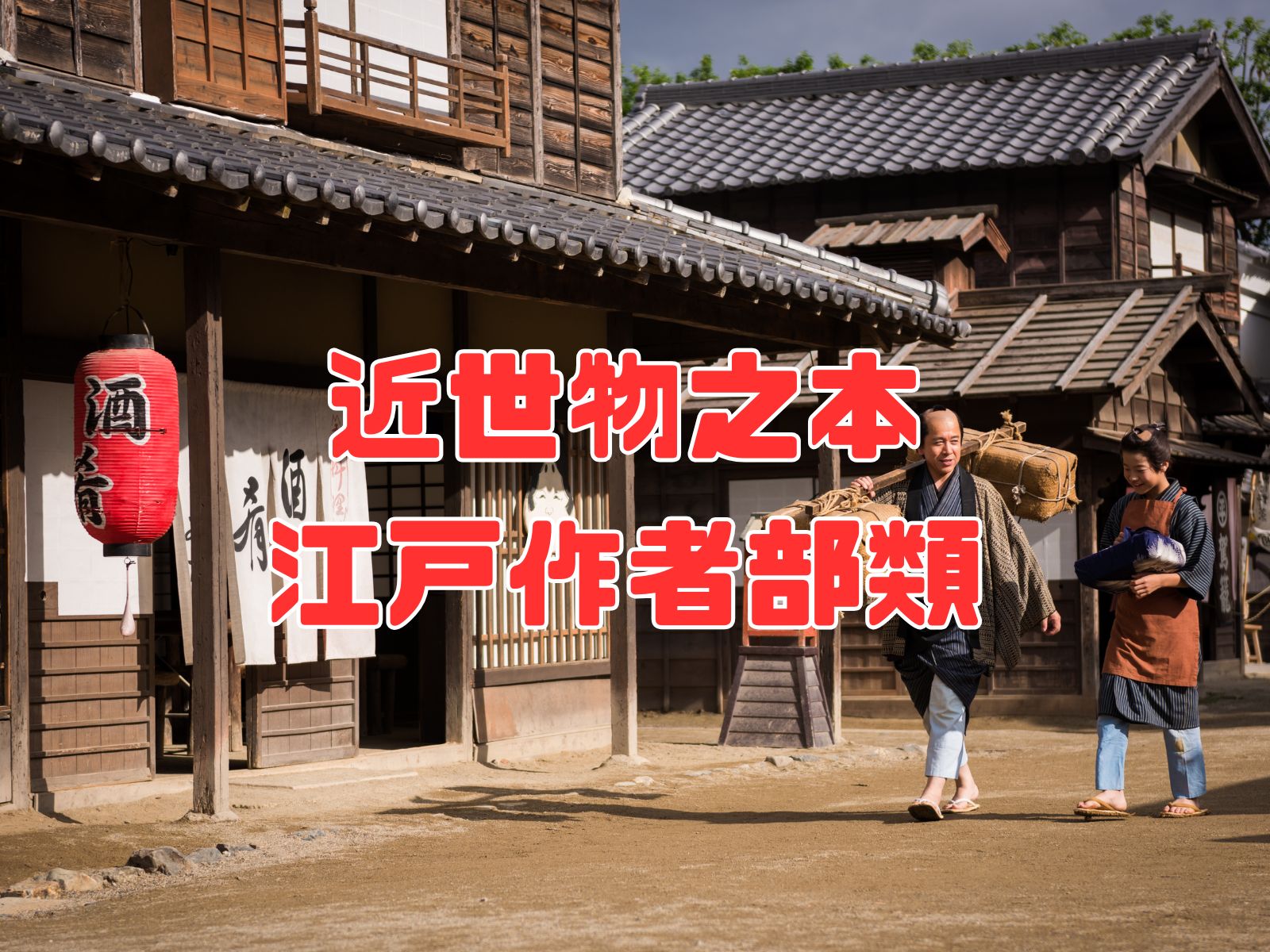
"Kinsei Mononohon Edo Sakusha Burui" (近世物之本江戸作者部類 - meaning "Biographies and Classifications of Edo Period Authors") is a monumental biographical collection written by Kyokutei Bakin (曲亭馬琴 - also known as Takizawa Bakin), a prominent novelist of the late Edo period. In this work, Bakin compiles detailed biographies and critical evaluations of exactly 139 Gesaku (戯作 - light/popular literature) authors of his era.
As one of the absolute literary giants of his time, Bakin critiqued fellow authors active from the mid-to-late Edo period, offering highly subjective, invaluable insights into the feudal literary scene, publishing industry, and cultural environment. The compilation spans multiple popular genres, including Sharebon (洒落本), Yomihon (読本), Kibuyoshi (黄表紙), and Goukan (合巻).
Bakin was renowned for his incredibly sharp, uncompromising critical eye. Because "Kinsei Mononohon Edo Sakusha Burui" contained highly biting, sometimes harsh criticisms of his active contemporaries, it was withheld from publication during his lifetime after its completion in 1834.
It was only published posthumously in later generations, quickly becoming an indispensable historical resource for modern researchers studying Edo-period popular literature.
Providing critical biographies of over 100 authors, the work offers precious historical insights into the relationships between authors, publishers (Hanmoto - 版元), and contemporary readers in feudal Japan.
Written by an active, highly popular novelist from the inside, this compilation serves as an irreplaceable primary source, offering a rare look into the internal dynamics of the Edo literary world.
Historical Context
During the Edo period when "Kinsei Mononohon Edo Sakusha Burui" was penned, the publishing industry underwent rapid commercialization and formalization.
Under long political stability and robust economic development, popular culture flourished dramatically, centered in major urban hubs like Edo and Osaka.
Rising literacy rates among the common people triggered a massive boom in reading, prompting publishers to invent diverse literary genres. In particular, illustrated humorous booklets called Kusazoshi (草双紙) became highly popular among the masses, which eventually evolved into sophisticated genres like Kibiyoshi and long-form Yomihon.
Unlike classical court literature reserved for the ruling samurai and noble classes, this new popular literature directly mirrored the daily lives, struggles, and humor of the common townsfolk (Chonin). It was within this dynamic, commercialized literary explosion that Bakin crafted his work, analyzing his peers with a unique critical framework.
Decoding the Title
Kinsei Mononohon (近世物之本)
"Kinsei Mononohon" refers to the diverse genres of popular Gesaku books published during the early modern (Kinsei / Edo) period. The word "Mononohon" originally denoted the origin or root source of things, but gradually shifted to represent story sourcebooks, and eventually, novels and narratives themselves.
Edo Sakusha Burui (江戸作者部類)
"Edo Sakusha Burui" denotes the systematic classification of Edo-based writers. Contemporary authors were grouped by their narrative styles and formats:
- Yomihon Authors: Writers who focused on complex, highly moralistic long-form novels, famously led by Kyokutei Bakin and Santo Kyoden.
- Kibiyoshi Authors: Writers who crafted illustrated, highly satirical short stories.
- Sharebon Authors: Writers who penned witty, highly satirical books set in pleasure quarters, targeting mature urban readers.
- Goukan Authors: Writers of illustrated, multi-volume novels that combined elements of Yomihon storylines with Kibiyoshi formats.
Combined Meaning
Weaving these terms together, the title translates to: "A systematic classification and critical collection of the popular Gesaku authors active in the capital of Edo during the early modern era."
Academic Application and Value
"Kinsei Mononohon Edo Sakusha Burui" is heavily referenced by modern historians as an irreplaceable archive for early modern Japanese literature studies.
When researching a specific author's style, publishing history, or biography, Bakin's contemporary critique provides unmatched historical perspective. He analyzed the individual personality, talent, strengths, and flaws of each writer, offering deep insights.
Furthermore, it serves as an excellent window into the mechanics of the feudal literary market, detailing peer rivalries, negotiations with major publishers, and the real-time feedback of the reading public.
Key Related Concepts
"Kinsei Mononohon Edo Sakusha Burui" is closely linked to several other early modern Japanese literary terms:
- Yomihon: A highly popular genre of Edo-period historical fiction, typically featuring complex plots, moralistic themes (kanzen chokuaku), and minimal illustrations.
- Kibiyoshi: Highly popular illustrated booklets characterized by their yellow covers and sophisticated, adult-oriented social satire.
- Goukan: Multi-volume illustrated books that bound multiple sheets together, merging the deep plots of Yomihon with Kusazoshi illustrations.
- Sharebon: Witty novels focused on the dialogue, fashion, and manners of the pleasure quarters.
- Kusazoshi: A broad category of woodblock-printed, highly illustrated popular literature for the common people.
Conclusion
"Kinsei Mononohon Edo Sakusha Burui" stands as an extraordinary biographical archive of popular writers, compiled by the legendary Kyokutei Bakin. Offering a rare, internal look into the feudal publishing market, it is vital to modern literary research.
Because Bakin's sharp, direct reviews did not spare his famous contemporaries, the manuscript remained unpublished until long after his death.
Far beyond a simple list of names, this work is a profound testament to Bakin's literary philosophy, critical genius, and the entire ecosystem of Edo-period popular culture.
Publication Info
| Specification | Details |
|---|---|
| Publisher | Iwanami Shoten (岩波書店) |
| Format | Iwanami Bunko (岩波文庫) |
| ISBN | 9784003022573 |
Supplementary Notes
"Kinsei Mononohon Edo Sakusha Burui" is currently published in modern print by Iwanami Shoten as an Iwanami Bunko paperback, annotated by literary scholar Takeshi Tokuda. The modern volume also includes Santo Kyoden's biography Iwahademonoki (伊波伝毛乃記) and Santo Kyozan's biography of Bakin, Kaimei Hiso (蛙鳴秘鈔).
About "Kinsei Mononohon Edo Sakusha Burui (近世物之本江戸作者部類 - Kyokutei Bakin's Biographies of Edo Gesaku Authors and Feudal Literary Criticism)"
This page provides the English definition and usage guide for the professional term "Kinsei Mononohon Edo Sakusha Burui (近世物之本江戸作者部類 - Kyokutei Bakin's Biographies of Edo Gesaku Authors and Feudal Literary Criticism)." If you have any suggestions, feedback, or corrections regarding our terminology articles, please feel free to reach out via our contact form.