Guragura Earthquake (Sensation of Shaking, Seismic Waves, and Disaster Preparedness)
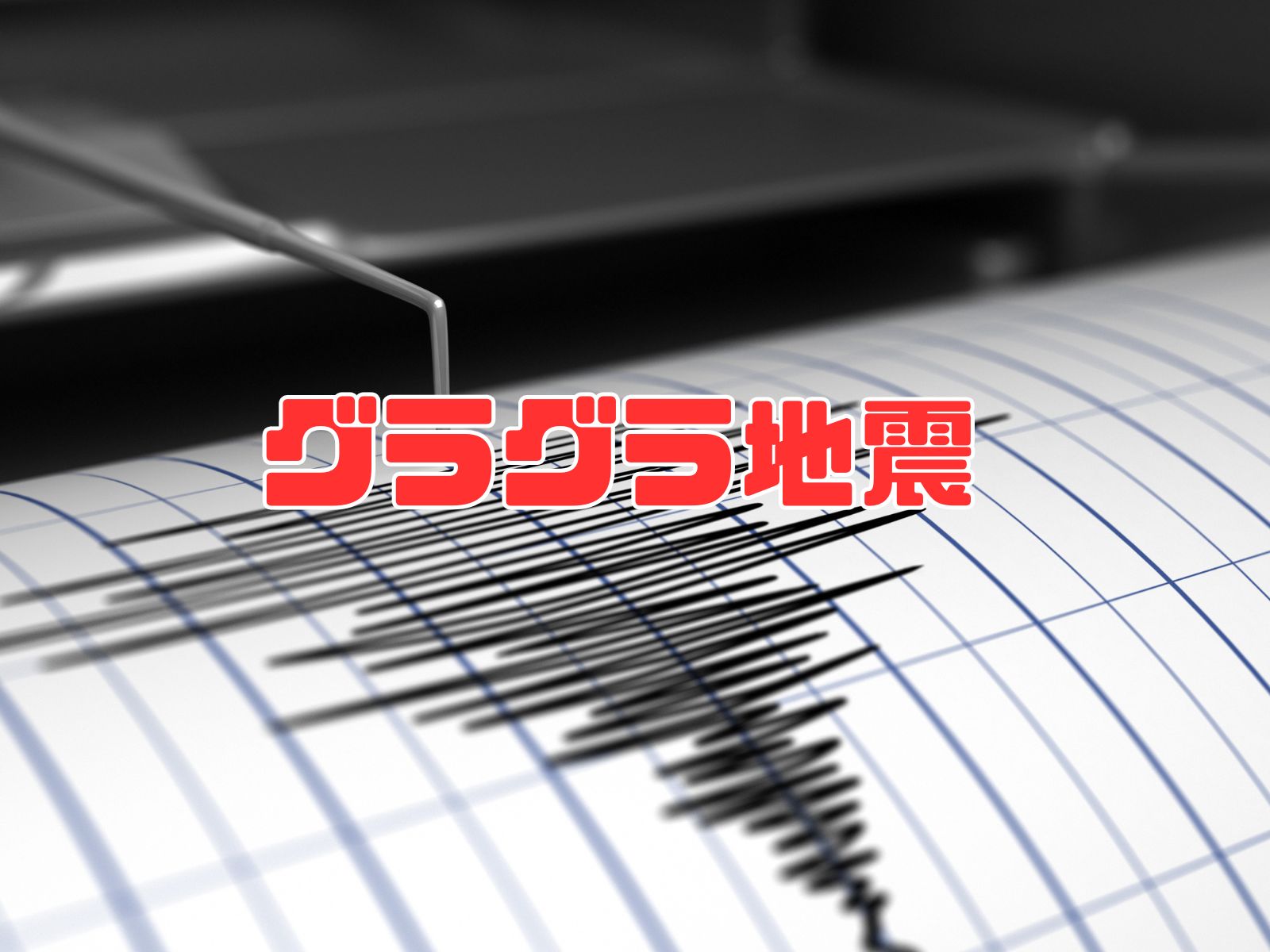
Earthquakes are major natural disasters that profoundly impact our lives.
When a quake occurs, the ground shakes, potentially damaging structures, disrupting vital utilities, and causing severe loss. Understanding earthquakes is critical to strengthening our safety and taking proper protective actions.
In recent years, the colloquial Japanese phrase "Guragura Jishin" (highly reminiscent of violent, rumbling, or swaying movement) is frequently heard in household settings.
While the term vividly conveys the physical sensation of violent horizontal shaking, it is not a scientific term defined in seismology, meaning it does not indicate specific magnitudes, depths, or seismic intensities.
This article provides a comprehensive guide explaining the context of "Guragura Jishin," detailing basic earthquake physics, expert views, historical events, and essential safety measures.
Basic Science of Earthquakes
To understand the context of severe shaking, we must examine the underlying mechanics of earthquakes, covering tectonic plates, seismic intensity, magnitude, and seismic waves.
Tectonic Plate Mechanics
The Earth's crust is divided into several massive rocky slabs called tectonic plates.
These plates move continuously at a rate of several centimeters per year, grinding against, colliding with, or sliding beneath one another.
Oceanic plates are denser than continental plates, causing them to subduct beneath continental plates. This subduction creates tremendous friction and strain within the continental crust.
When this accumulated strain exceeds the strength of the rock layers, they suddenly fracture and rupture, releasing energy as an earthquake.
The Japanese archipelago sits at the junction of four major tectonic plates, making it one of the most seismically active regions in the world.
Plate-boundary earthquakes (subduction zone quakes) are generally massive in scale and cause widespread damage.
Inland earthquakes occurring along active faults within plates can also occur; when their epicenters are shallow, they can trigger devastating local damage.
Seismic Intensity vs. Magnitude
The scale and effects of an earthquake are measured using two distinct metrics: Seismic Intensity (Shindo) and Magnitude (M).
| Metric | Description |
|---|---|
| Seismic Intensity (震度) | Measures the strength of ground shaking at a specific location. In Japan, the JMA scale ranges from 0 to 7 across 10 levels. |
| Magnitude (マグニチュード) | Measures the total energy released at the earthquake's source (epicenter). |
Seismic intensity depends not only on the earthquake's magnitude but also on the distance from the epicenter and local soil conditions.
Shaking is typically stronger closer to the source, and soft, loose soil can significantly amplify waves.
Particularly, reclaimed land or soft alluvial plains amplify movements, making residents experience the "Guragura" shaking far more intensely.
Magnitude represents the absolute size of the earthquake.
The scale is logarithmic; an increase of 1.0 in magnitude translates to roughly 32 times more energy, while an increase of 2.0 represents a 1000-fold energy jump. Thus, a minor difference in magnitude indicates a massive difference in actual power.
Seismic Waves
Seismic energy travels through the ground as seismic waves, primarily categorized into P-waves (primary/compressional waves) and S-waves (secondary/shear waves).
P-waves vibrate parallel to the direction of travel and are the fastest, traveling through both solid and liquid mediums. They arrive first as minor, high-frequency rattling (initial tremors).
S-waves vibrate perpendicular to the direction of travel, are slower, and only travel through solids. They arrive second, triggering the violent, low-frequency horizontal swaying (main shock) that people associate with "Guragura" shaking.
What Kind of Shaking is Associated with "Guragura"?
While not a scientific term, "Guragura Jishin" generally describes earthquakes characterized by the following features:
- High Seismic Intensity
Quakes measuring JMA intensity 5-Upper or higher, involving violent shaking that makes it difficult to stand or move, are frequently described this way. These quakes pose serious risks to buildings, infrastructure, and human life. - Violent Horizontal Swaying
Seismic movements are divided into vertical and horizontal vectors. The term "Guragura" strongly evokes rolling horizontal motions. Horizontal forces are highly dangerous to buildings, as they apply severe shear and twisting stress that can trigger structural collapse. - Prolonged Shaking Duration
Massive earthquakes with large rupture zones generate waves that shake the ground for several minutes. This long-duration swaying is often experienced as "Guragura." Particularly, long-period ground motion can cause high-rise buildings to sway resonant and violently over long periods, creating major hazards.
"Guragura" Shaking and Seismic Waves
In scientific terms, a "Guragura" sensation is caused by the arrival of S-waves and surface waves. These shear waves induce lateral, horizontal motions that place structural integrity under extreme stress.
Structural Hazards During Violent Shaking
Violent shaking causes buildings to collapse, furniture to topple over, and glass to shatter.
Vertical shocks place extreme pressure on supports, potentially pulling pillars from their foundations.
They can also cause heavy objects to fly, posing lethal risks. Meanwhile, horizontal forces twist structures, leading to shear failure and collapse. If the epicenter is under the ocean, there is also the severe danger of subsequent tsunamis.
Psychological and Social Impacts
Strong, prolonged shaking triggers intense fear and can cause immediate panic. Surviving such violent movements can also leave lasting psychological trauma, leading to chronic anxiety, stress, and sleep disorders among survivors.
Historical Cases of Catastrophic Shaking
Two major modern Japanese disasters illustrate the devastating power of severe shaking:
The Great Hanshin-Awaji Earthquake (1995)
Occurring on January 17, 1995, this was a shallow M7.3 inland earthquake that struck directly beneath a highly populated area.
It recorded JMA intensity 7 in Kobe, unleashing extreme vertical and horizontal forces that collapsed thousands of buildings and claims 6,434 lives, highlighting the catastrophic threat of urban-inland quakes.
The Great East Japan Earthquake (2011)
Striking on March 11, 2011, this was a massive subduction-zone M9.0 earthquake off the Pacific coast.
It generated violent, long-period shaking across vast regions of Japan, followed by a massive tsunami that caused catastrophic destruction, demonstrating how wide-scale tectonic ruptures propagate hazards over hundreds of kilometers.
Proactive Disaster Preparedness
To survive violent seismic events, individual households must implement systematic earthquake safety measures in daily life:
- Secure Heavy Furniture
Toppling furniture is a leading cause of injury. Secure all cabinets, shelves, and heavy appliances using sturdy L-brackets, tension rods, or safety straps. - Map Clear Evacuation Paths
Ensure exit paths are never blocked by loose items. Identify safe zones in your home and plan multiple evacuation routes. - Assemble Emergency Kits
Prepare a grab-and-go kit containing emergency water, non-perishable food, flashlights, radios, and first-aid supplies. Strive for at least a three-day supply of essentials per person. - Utilize Official Information Channels
During a crisis, ignore rumors. Monitor official announcements from the JMA, municipal broadcasters, and emergency radio stations.
Contextual Use of Colloquial Terms
While "Guragura Jishin" is excellent for teaching children about earthquake safety or describing personal experiences, it lacks the precision required for official documents or news reporting. For formal communications, using exact metrics like JMA Intensity or Richter Magnitude remains essential.
Summary
This article explored the context and technical realities surrounding the colloquial term "Guragura Jishin."
Though not a seismological term, it vividly illustrates the danger of horizontal shear waves. By understanding seismic mechanics and executing home safety preparation, we can safeguard our families and build resilient communities against the threat of natural disasters.

【PR】Emergency survival kit in case of disaster
・Fully prepared with 38 types and 44 total items
・72-hour survival backup
・Comes with peace-of-mind disaster manual
・Highly reliable survival kit
About "Guragura Earthquake (Sensation of Shaking, Seismic Waves, and Disaster Preparedness)"
This page provides the English definition and usage guide for the professional term "Guragura Earthquake (Sensation of Shaking, Seismic Waves, and Disaster Preparedness)." If you have any suggestions, feedback, or corrections regarding our terminology articles, please feel free to reach out via our contact form.