Kago no Hana (The Symbolism of Flowers in Baskets: Funerals and Tea Ceremony)
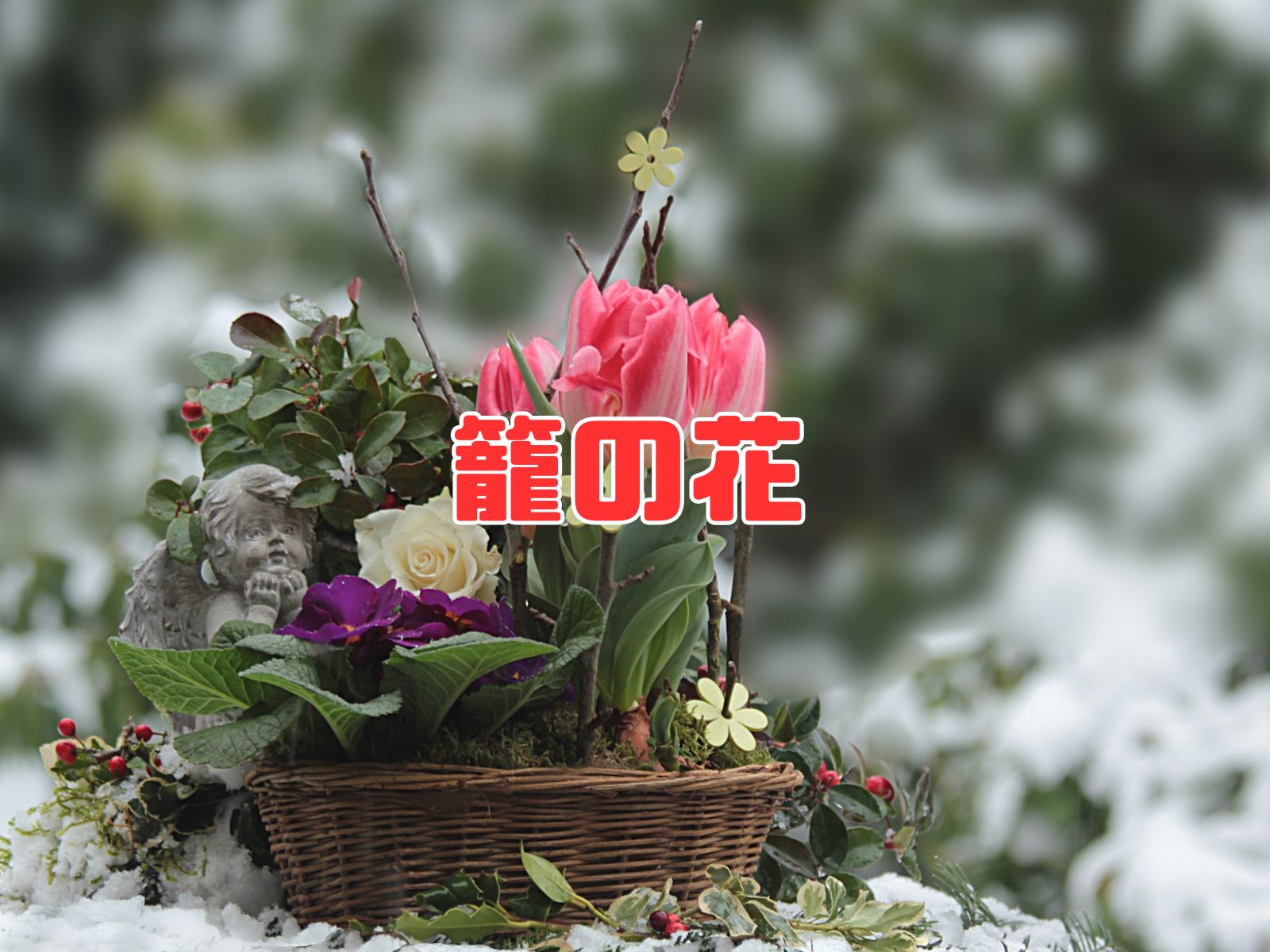
The Japanese phrase "Kago no Hana" (籠の花—literally "flowers in a basket") holds two distinct, highly significant cultural meanings: funeral floral offerings and rustic flower arrangements in Japanese tea ceremonies (Chado).
In both contexts, combining woven baskets with fresh flowers creates a unique aesthetic, expressing deep spiritual and cultural values.
Kago no Hana in Funerals
In Japanese funerals, Kago no Hana refers to a type of floral offering (Hanadeko / Hanakago) presented to pray for the peaceful repose of the deceased and to console the bereaved family. These arrangements typically feature white chrysanthemums, lilies, and carnations beautifully arranged inside spherical baskets woven from finely split bamboo. Placed on both sides of the funeral altar, they add a solemn, dignified color to the space.
This practice is believed to originate from the ancient Buddhist ritual of Sange (散華—the scattering of flowers to honor the Buddha).
In some regional funeral traditions, shaking a flower basket (Kago) to scatter coins on the ground is directly compared to this Sange ritual.
Picking up these scattered coins is traditionally believed to share the longevity and blessings of the deceased.
Depending on the region, there are also long-standing traditions of carrying these flower baskets directly to the cemetery or placing them directly on the grave.
These customs underscore the historical role of flower baskets as instruments of spiritual comfort, pacifying the spirit of the deceased.
Kago no Hana in Tea Ceremony
In Japanese tea ceremony, Kago no Hana refers to the specific vessels used to present seasonal flowers in the tea room.
Woven baskets made of bamboo or wisteria vines are utilized, classified by placement into "Oki-hanaire" (placed on the tokonoma floor), "Kake-hanaire" (hung on the wall), and "Tsuri-hanaire" (suspended from the ceiling).
These basket vessels are broadly categorized into Karamono-kago (Chinese baskets) and Wamono-kago (Japanese baskets). Karamono-kago, imported from China during the Muromachi period, are characterized by highly intricate, delicate weaving patterns.
Conversely, Wamono-kago developed independently in Japan during the stabilization of tea ceremony by the tea master Sen no Rikyu.
Rikyu embraced the spirit of *Wabi-sabi* by using rustic, everyday objects as flower vessels—such as the Nata-kago (resembling a hatchet sheath) or the Katsura-kago (resembling a fisherman's bamboo fish basket).
Due to their lightweight, airy, and refreshing appearance, woven basket flower vessels are predominantly featured during the warm tea season (Furo) from May to October.
Etymology and Cultural Origins
While the exact literary origins of the funeral flower basket are difficult to pinpoint, certain regions—such as parts of Miyagi and Fukushima prefectures—maintain the strict practice of carrying flower baskets to cemeteries or erecting them on graves. This highlights that these flower-filled baskets carry a deep, religious significance tied to pacifying spirits and honoring the dead.
On the other hand, the tea ceremony tradition of Wamono-kago began when Sen no Rikyu programmatically integrated everyday baskets into the tea room.
Rikyu discovered profound aesthetic beauty in mundane objects like sheaths and fish baskets, elevating them into refined expressions of tea philosophy.
Literary and Artistic References
Classical Literature and Art
Flowers in baskets have frequently appeared in Japanese literature and art since ancient times.
Traditional guides detail elegant techniques for arranging summer grasses inside woven baskets, bringing cool summer landscapes indoors by combining wildflowers like bellflowers and gentians.
A famous haiku by the master Matsuo Basho reads: *"Hotarukago / kurakeleba yuri / moetatasu"* (A firefly cage / when it darkens, shaken / flashes into flame).
This poem captures the ethereal beauty of fireflies flickering inside a woven cage on a summer night, illustrating the evocative aesthetic shared by woven baskets, flowers, and light.
Modern Interpretations and Design
Today, the aesthetic of Kago no Hana continues to inspire diverse fields of design and art.
For instance, the modern Japanese fashion designer Maiko Kurogouchi (Mame Kurogouchi) created a collection inspired by the historic bamboo baskets carved by the mid-Edo period master craftsman Rokansai Iizuka.
This serves as a brilliant example of how traditional basket weaving continues to shape contemporary global fashion.
Furthermore, regional funeral customs involving Kago no Hana exhibit fascinating diversity.
While some areas shake the flower baskets to scatter coins as a blessing of longevity, others do so as a lively celebration.
In Sakate-cho, Toba City, Mie Prefecture, families place coins matching the age of the deceased into a flower basket to scatter along the funeral procession path. The act of gathering these coins is called "Mairi ni yuku," representing a deeply sacred local ritual.
Related Terms and Synonyms
Terms sharing similar meanings to Kago no Hana include Hanakago (flower basket), Hanagatami (flower hamper), Sangekago (Sange basket), and Keko (flower stand).
While all describe baskets holding flowers, each carries unique cultural nuances. For example, "Hanagatami" refers primarily to baskets used for gathering wildflowers, whereas "Sangekago" describes the specialized baskets holding flower petals for Buddhist temple services.

AD
・Get 200 yen worth of PayPay points on free registration!
・A trusted point site operating for 17 years.
・Exchange points directly for cash or e-money.
・24-hour instant exchanges available, earn up to 2,200 yen upon completing conditions!
Summary
"Kago no Hana" is a concept deeply intertwined with Japan's traditional spiritual culture, spanning funerals and tea ceremonies.
Depending on the context, era, and region, it carries diverse meanings, continuing to enrich contemporary fashion, art, and daily Japanese life today.
Whether serving as a solemn, comforting offering to honor the spirits of the deceased or as a rustic, wabi-sabi vessel in the tea room, these basket arrangements hold an essential cultural role. As traditional crafts merge with modern design, Kago no Hana continues to evolve as an enduring symbol of Japanese aesthetics.
About "Kago no Hana (The Symbolism of Flowers in Baskets: Funerals and Tea Ceremony)"
This page provides the English definition and usage guide for the professional term "Kago no Hana (The Symbolism of Flowers in Baskets: Funerals and Tea Ceremony)." If you have any suggestions, feedback, or corrections regarding our terminology articles, please feel free to reach out via our contact form.