Multimodal AI (Integrated Sensory Processing)
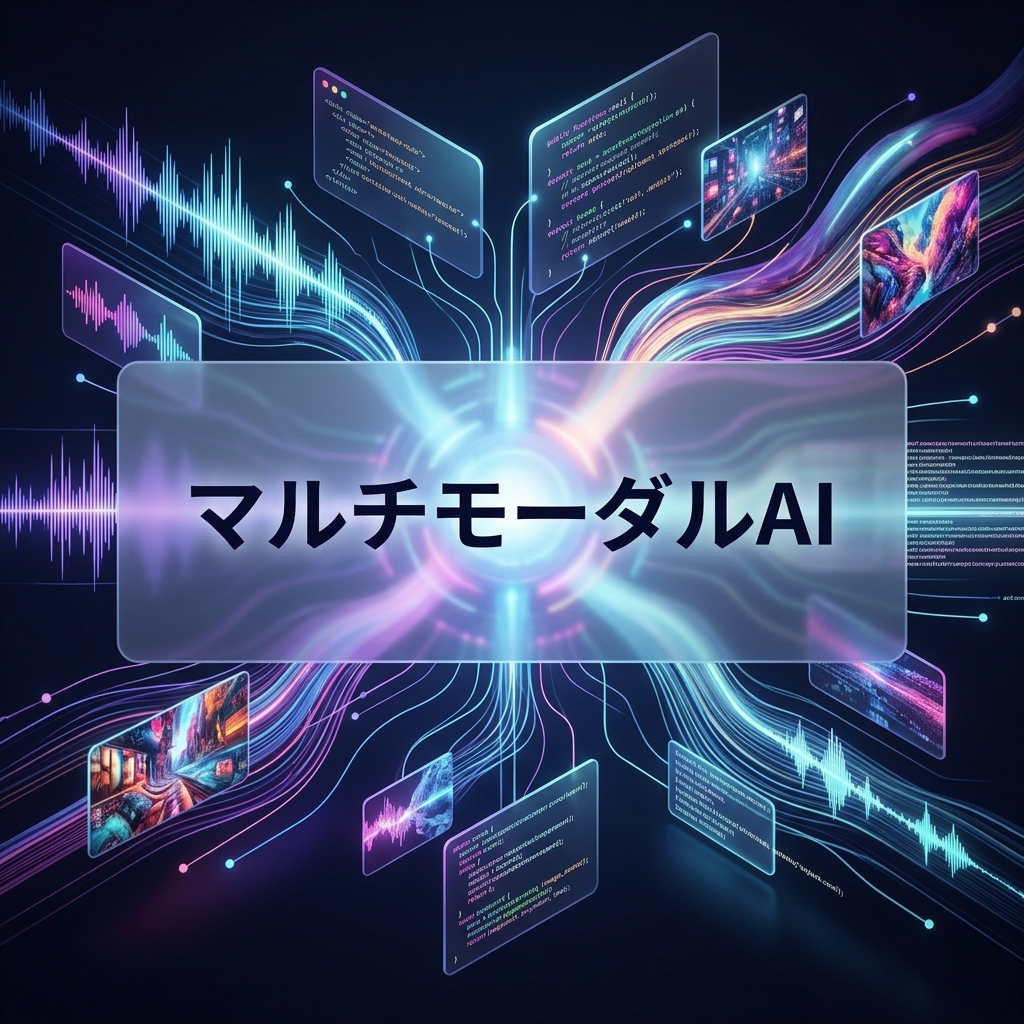
- Integrated Sensory Processing: A breakthrough AI architecture that processes text, images, audio, and video simultaneously to form holistic, human-like contextual reasoning.
- Evolutionary Leap: Evolves beyond traditional "single-modal" systems (which only read text or recognize isolated images) toward complex, situational awareness.
- Real-World Utility: Powers advanced autonomous driving, remote medical diagnostics, and real-time, camera-enabled smart customer interactions.
"Multimodal AI" is a next-generation artificial intelligence technology denoting "systems capable of processing, integrating, and reasoning across multiple distinct data formats or modalities—such as text, images, audio, video, and numerical sensors—simultaneously, matching human cognitive patterns."
What is Multimodal AI? The Evolutionary Leap Beyond Single-Modal Systems
Historically, AI applications were designed as "single-modal" specialists. For example, a translation tool operated strictly on text, while a camera system scanned for isolated images. Multimodal AI, by contrast, integrates these sensory paths. Just as a human understands a speaker not just by listening to their words (text), but by reading their vocal pitch (audio) and analyzing facial expressions (image), a multimodal AI unifies these distinct inputs to construct highly accurate, contextually aware real-world decisions.
Why Has Multimodal AI Experienced Such a Sudden Technological Breakthrough?
The rapid shift from Large Language Models (LLMs) to Large Multimodal Models (LMMs) is fueled by advanced deep learning techniques and massive cloud compute clusters. Pioneers like OpenAI's GPT-4o, Google's Gemini 1.5 Pro, and Anthropic's Claude 3.5 Sonnet exemplify this evolution. These models allow users to point a smartphone camera at a physical object or mathematical formula and ask questions verbally; the AI analyzes the live video feed and provides logical, real-time audio guidance. This is made possible by contrastive learning frameworks (e.g., CLIP) that map different data types into a single, unified semantic meaning space inside the neural network.
Practical Everyday & Corporate Dialogue Examples
Dev Manager: "Previously, when clients uploaded a screenshot of their machine error, our OCR simply extracted the text code and matched it to an automated script." VP: "Can we make this interaction feel more natural and human-like?" Dev Manager: "Absolutely. By deploying a multimodal AI chatbot, customers can simply hover their camera over the broken machine and speak. The AI assesses the physical crack on the screen, detects panic in their voice tone, and instantly provides voice-guided, diagram-supported walkthroughs to resolve the problem safely."
Multimodal AI vs. Alternate AI Architectures
| AI Category | Processed Modalities | Key Attributes & Boundaries |
|---|---|---|
| Single-Modal AI | Text-only, or image-only. | Highly efficient for specific, narrow operations, but unable to reason across multiple contexts. |
| Multimodal AI | Unifies text, images, audio, and video inputs. | Capable of comprehensive situational awareness: "looking, listening, and discussing" concurrently. |
| Cross-Modal AI | Translates text to image, or image to text. | Focusses on converting data from one medium into another (e.g., text-to-image art generation). |
Frequently Asked Questions (FAQ)
A: Traditionally, these models required massive, high-powered cloud clusters. However, with the rapid evolution of smartphone Neural Processing Units (NPUs), lightweight, highly efficient "on-device" multimodal models are now beginning to run locally, ensuring zero-latency, secure offline operations on modern mobile hardware.
Critical Privacy Cautions & Ethical Developer Etiquette
Because multimodal systems continuously analyze image and audio inputs, developers and brands must maintain strict user privacy safeguards. Whenever an app utilizes camera or microphone feeds, clearly explaining what data is captured, and providing ironclad guarantees that private recordings are processed in-memory or excluded from generic model training, is essential professional business etiquette.
Summary: Elevating AI from Raw Text to Unified Cognitive Awareness
The dawn of Multimodal AI marks a historic transition. Artificial intelligence has stepped beyond simple text aggregation to become a sensory partner that genuinely interacts with our physical reality. By bridging words, visuals, and sounds, it opens up unlimited possibilities for creative, intuitive, and natural human-technology collaboration.
About "Multimodal AI (Integrated Sensory Processing)"
This page provides the English definition and usage guide for the professional term "Multimodal AI (Integrated Sensory Processing)." If you have any suggestions, feedback, or corrections regarding our terminology articles, please feel free to reach out via our contact form.