Nankai Trough Earthquake Extra Information (JMA Early Warning Protocols, Tectonic Anomaly Monitoring, and Disaster Response Guidelines)
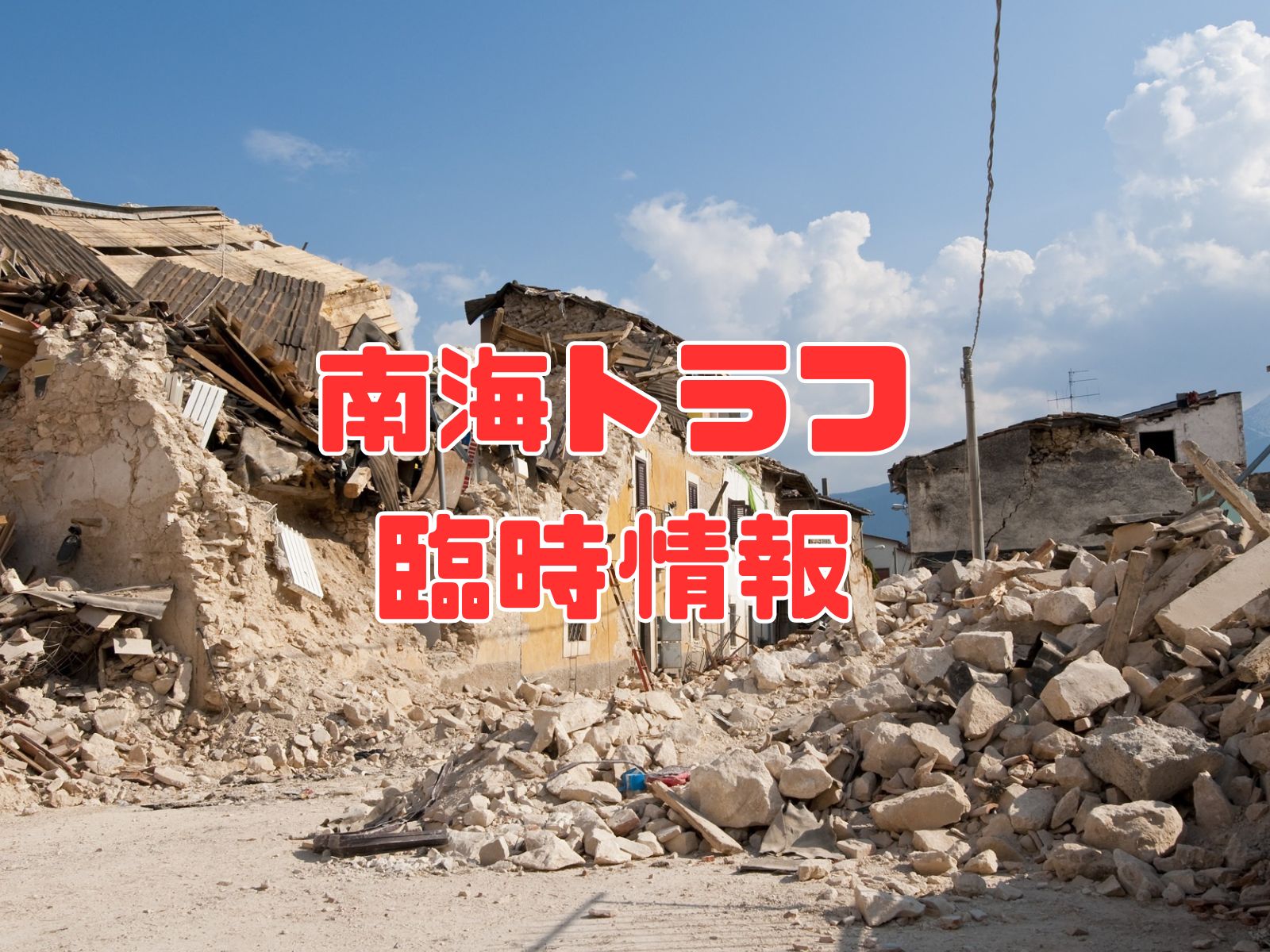
Japan is a highly seismically active nation, and a major earthquake could strike any region at any moment.
A megaquake predicted along the Nankai Trough carries the potential to inflict catastrophic damage far exceeding the 2011 Great East Japan Earthquake, keeping coastal communities under persistent tectonic threat.
To mitigate this immense threat, the Japan Meteorological Agency (JMA) issues "Nankai Trough Earthquake Extra Information" (南海トラフ地震臨時情報). This real-time warning grid is designed to alert the public, prompt early evacuations, and coordinate pre-emptive safety measures when the probability of a megaquake is evaluated as significantly elevated.
In the subduction zone of the Nankai Trough, the eastern segment (Tonankai) could rupture first, potentially triggering a time-lagged rupture on the western segment (Nankai), as documented in historical seismological cycles.
What is the Nankai Trough Extra Information?
The Nankai Trough Earthquake Extra Information is an official warning issued by the JMA when anomalous tectonic phenomena are captured along the plate boundary, or when the statistical probability of a megaquake is evaluated as relatively elevated compared to normal baseline levels.
This framework keeps the public informed across the entire Nankai Trough region when the immediate threat of a major subduction-zone failure rises.
For example, if geodetic sensors detect anomalous crustal deformation along the plate interface, the JMA will immediately issue this extra information to prepare coastal regions.
It is critical to understand that this system does not predict the exact day or hour of a future earthquake. Instead, it relies on real-time geophysics telemetry to communicate elevated risks, allowing citizens to implement pre-emptive evacuation plans and family communication protocols based on JMA guidelines.
Trigger Conditions for Issuing Nankai Trough Extra Information
The JMA triggers this warning protocol under two primary conditions:
-
Anomalous Tectonic Phenomena Detected along the Nankai Trough, Initiating Seismological Investigation
- This occurs if a Magnitude 6.8 or higher earthquake strikes within the designated "monitoring zone" (which extends beyond the primary focal area), or if borehole strainmeters capture distinct, anomalous slow-slip behavior indicating a major shift in plate locking.
- On August 8, 2024, when a Magnitude 7.1 earthquake struck off the coast of Hyuga-nada, the JMA immediately triggered this warning protocol.
-
Publishing the Analytical Findings of the Tectonic Investigation
- Within 5 to 30 minutes of capturing an anomaly, the JMA issues a preliminary "Nankai Trough Earthquake Extra Information (Under Investigation)" (調査中).
- Subsequently, the JMA convenes an emergency meeting of the "Assessment Committee for Nankai Trough Earthquakes" to evaluate the telemetry, publishing a follow-up warning categorized under specific action protocols.

【PR】いざという時のための防災セット
・38品目全44アイテムで準備万端
・72時間分の備え
・防災マニュアル付きで安心
・安心のサバイバルセット
Classification and Content of Extra Information Categories
Following the initial assessment, the JMA appends one of four specific sub-categories to the extra information title. Key classifications include:
| Warning Category | Lyrical Description / Explanation | Example Trigger Criteria |
|---|---|---|
| Under Investigation (調査中) | Anomalous geodetic deformation or seismicity is captured along the plate boundary, initiating emergency review. | A Magnitude 6.8 or higher earthquake strikes within the designated monitoring zone. |
| Megaquake Alert (巨大地震警戒) | Issued when a massive plate-boundary earthquake of Magnitude 8.0 or higher occurs within the Nankai Trough epicentral zone, warning of a potential subsequent megaquake. | A Magnitude 8.0 or higher event occurs along the primary tectonic plate boundary. |
| Megaquake Attention (巨大地震注意) | Issued when a plate-boundary earthquake of Magnitude 7.0 to 7.9, or anomalous slow-slip crustal movements, is evaluated along the subduction boundary. | A Magnitude 7.0 to 7.9 event occurs within the focal zone boundary. |
| Investigation Concluded (調査終了) | Issued when seismologists evaluate the observed tectonic anomalies as having no direct physical link to an impending megaquake. | Geophysical data suggests the anomalies are non-precursory in nature. |
Nankai Trough Earthquake Related Commentary Information
In addition to "Extra Information," the JMA regularly publishes "Related Commentary Information" (南海トラフ地震関連解説情報).
These reports deliver ongoing scientific commentary and geodetic updates following the issuance of warning categories. They are also utilized to publish findings from regular, monthly meetings of the JMA's assessment committee.
Recommended Actions and Response Protocols
Writers and citizens must understand that appropriate actions are strictly determined by the JMA's specific warning sub-category. When the JMA publishes a warning, it is instantly routed across television, radio, internet apps, municipal sirens, and emergency broadcast trucks.
1. When "Under Investigation" (調査中) is Issued
- Immediately prepare for potential evacuation, double-check emergency grab-and-go kits, and monitor media channels for upcoming updates.
- The JMA typically publishes the findings of its tectonic investigation within 2 hours of the initial trigger.
Since national and municipal governments will issue specific safety instructions based on the investigation outcome (Alert, Attention, or Concluded), maintain high readiness to follow these directives.
2. When "Megaquake Alert" (巨大地震警戒) is Issued
A "Megaquake Alert" indicates that the probability of a massive, subsequent plate-boundary failure has risen to an exceptionally high level. If this alert triggers, implement these safety actions immediately:
- Verify All Home Seismic Preparedness Systems.
- Keep Evacuation Clothing and Supplies Ready for Instant Exit.
- Anchor Heavy Furniture and Secure Glass Surfaces
- Secure shelves, televisions, and heavy appliances with L-brackets or straps, and apply safety film to windows.
- Prepare Emergency Grab-and-Go Kits
- Prepare water (3 liters per person per day), emergency rations, portable toilets, flashlights, radios, batteries, and essential medicines.
- Map Evacuation Paths and Family Check-in Channels
- Pre-confirm safe paths to local tsunami evacuation towers or high ground.
- Coordinate family safety checks using emergency hotlines like the 171 voice board.
- Avoid High-Risk Geological Areas
- Stay clear of low-lying coastlines, active cliffs, and known landslide hazard zones.
- If living in low-lying zones, sleep in the safest room on upper floors.
- Clear heavy objects from above beds or high shelves.
Regarding Pre-Evacuation Designated Zones
A Pre-Evacuation Designated Zone (事前避難対象地域) refers to coastal or low-lying areas designated by municipalities where residents cannot realistically reach safe high ground before a massive tsunami wave strikes.
These zones are classified into general "Resident Pre-Evacuation Zones" and "Vulnerable Populations Pre-Evacuation Zones" (for the elderly, disabled, and infants).
- Resident Pre-Evacuation Zones
Designated coastal areas where all residents are instructed to evacuate to safe shelters for a continuous 1-week period to mitigate immediate tsunami risks. - Vulnerable Populations Pre-Evacuation Zones: Zones where the elderly, infants, and individuals requiring assistance must initiate and maintain evacuation to ensure their safety.
If you reside in these pre-evacuation zones, a "Megaquake Alert" will trigger immediate evacuation orders from municipal authorities. Execute pre-evacuation procedures without delay.
Business Continuity and Corporate Response Protocols
When a "Megaquake Alert" triggers, businesses are expected to maintain vital operations while implementing maximum seismic and tsunami safety controls. Businesses operating inside pre-evacuation zones must adopt extreme safety protocols.
- Re-verify All In-House Seismic Anchoring and Survival Supplies.
- Perform Emergency Safety Inspections of Vital Industrial Systems
- Check primary manufacturing lines and machinery stability.
- Inspect potential hazard areas based on architectural seismic reports.
- Secure high-shelf items, overhead lights, and potential falling hazards.
- Check backup generators and emergency vehicles.
- Avoid High-Risk Logistics and Employee Transit Routes
- Re-route logistics vehicles away from coastal highways or tsunami inundation zones.
- Monitor the status of partner companies operating inside warning zones.
- Issue clear work-at-home or evacuation orders for employees living or commuting through high-risk zones.
- Re-verify Shelter Locations, Paths, and Evacuation Marshalling Procedures.
- Establish Rapid, Accurate Communication Channels for Employees and Facility Users.
- Transition to Remote Work Wherever Possible to Minimize Commuting Risks.
- Re-map logistics routes away from coastal segments, verify generator fuels, and double-check business survival reserves.
4. When "Investigation Concluded" (調査終了) is Issued
- Return to standard daily routines while maintaining normal seismic awareness.
Remember that "Concluded" simply means the specific observed anomaly is not precursory; it does not mean the long-term risk of a megaquake has disappeared.
5. Post-Megaquake Response One Week Later
- Under a "Megaquake Alert," if no massive event occurs within 1 week, the government will officially lift the strict pre-evacuation alert and transition to a 1-week "Megaquake Attention" protocol.
- Under a "Megaquake Attention" trigger, if no major anomaly is captured within 1 week, the government will officially lift the attention protocol, allowing citizens to return to standard routines while maintaining normal daily preparedness.
Regarding School Suspensions and Facility Closures
When a "Megaquake Alert" is active, public schools, community halls, and nurseries serving as evacuation shelters or located within tsunami inundation zones will execute emergency closures.
Private nursery systems and after-school programs serving high-risk zones will also implement temporary closures to secure infant safety.
Conclusion
A Nankai Trough Megathrust Earthquake carries the potential to inflict catastrophic casualties and destruction.
However, continuous household safety preparations can dramatically mitigate injuries and loss. The JMA's "Nankai Trough Earthquake Extra Information" serves as an essential life safety asset to help us prepare.
This guide has explained the extra information system, highlighting:
- It is triggered by real-time geophysics anomalies and plate deformation indicators,
- Recommended actions are strictly determined by JMA's sub-category updates,
- Maintaining robust daily preparedness remains our primary shield.
Remember that this system communicates statistically elevated risks; it is not a deterministic forecast. Tectonic situations can evolve rapidly. Always monitor official JMA channels and adapt safety measures calmly and rationally.
Authoritative Links and Government References
- Cabinet Office Disaster Prevention Information: https://www.bousai.go.jp/jishin/nankai/
- JMA Nankai Trough Earthquake Portal: https://www.jma.go.jp/jma/kishou/know/jishin/nteq/index.html
- JMA Real-time Extra Information Status: https://www.data.jma.go.jp/eew/data/nteq/index.html
- Toyohashi Municipal Nankai Trough Disaster Response Guidelines: https://www.city.toyohashi.lg.jp/44792.htm
About "Nankai Trough Earthquake Extra Information (JMA Early Warning Protocols, Tectonic Anomaly Monitoring, and Disaster Response Guidelines)"
This page provides the English definition and usage guide for the professional term "Nankai Trough Earthquake Extra Information (JMA Early Warning Protocols, Tectonic Anomaly Monitoring, and Disaster Response Guidelines)." If you have any suggestions, feedback, or corrections regarding our terminology articles, please feel free to reach out via our contact form.