Earthquake Prophecy Signs (Scientific Validity, Tectonic Stress, and Social Impact)
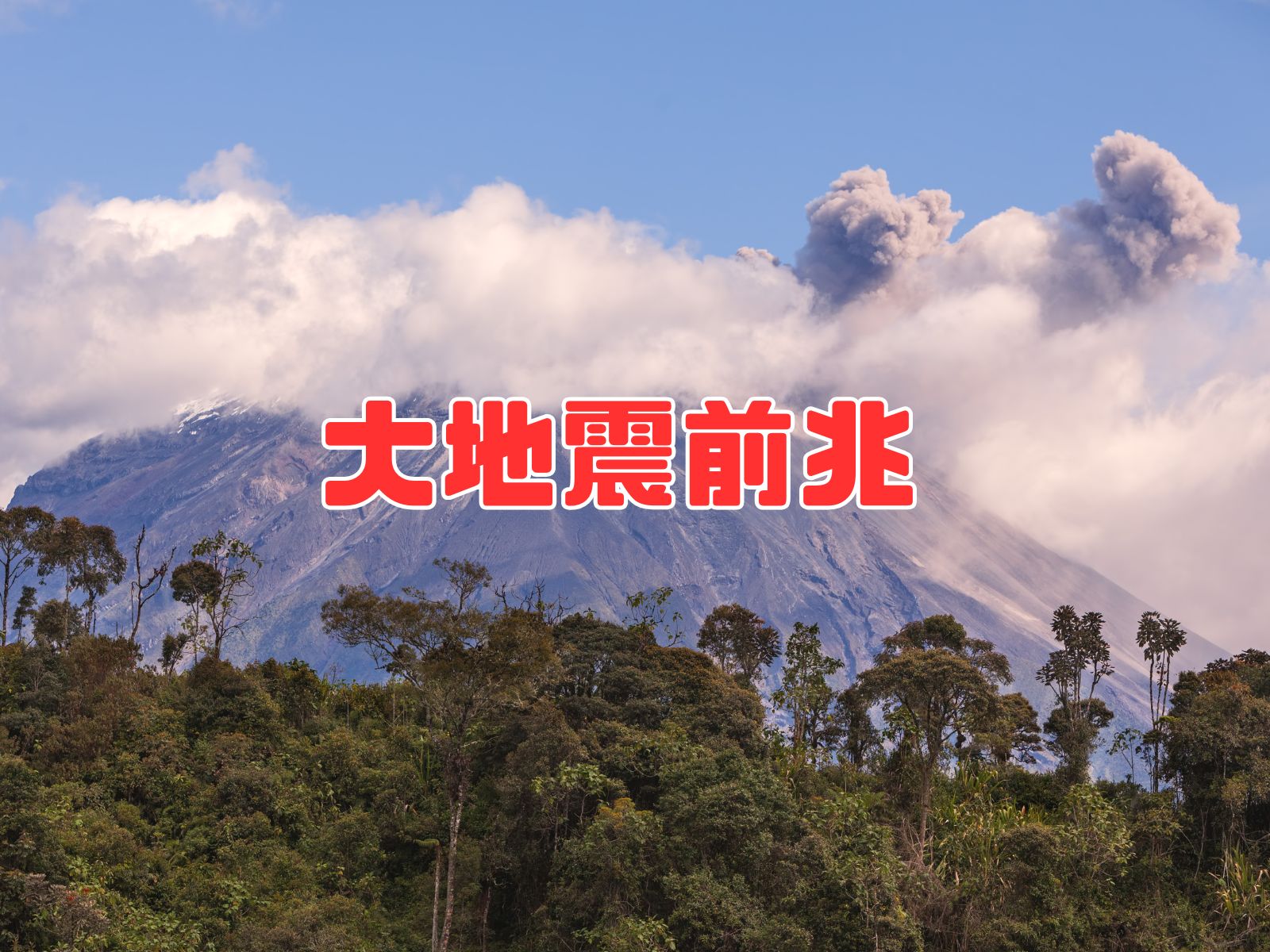
Living in an earthquake-prone country like Japan, predicting when and where a massive earthquake will strike is a subject of universal concern.
In recent years, various phenomena alleged to appear before earthquakes have gained public attention, and the term "Earthquake Prophecy Signs" (大地震予言前兆) has frequently appeared across media platforms.
This article examines this concept from multiple perspectives—exploring definitions, scientific validity, social impact, the role of media, and expert opinions—to build correct scientific awareness and promote disaster preparedness.
Word Definition
"Earthquake Prophecy Signs" refers to diverse phenomena alleged to manifest prior to a major earthquake.
These phenomena span a wide array of categories, including crustal deformation, electromagnetic anomalies, unusual animal behaviors, and atmospheric changes. They range from ancient folklore passed down through generations to recent anomalies identified through modern scientific sensors.
It is critical to clearly separate "Prophecy Signs" from "Seismological Prediction" (Yochi).
Seismological prediction refers to scientifically forecasting the exact timing, location, and magnitude of an impending earthquake based on empirical data.
Conversely, "Prophecy Signs" often lack rigorous scientific backing, heavily relying on anecdotal experience rules and folklore. While scientific forecasts provide objective, actionable data to coordinate public safety, unverified prophecy signs tend to fuel public anxiety and speculation. Relying on unverified claims can actively hinder rational disaster preparation.

【PR】いざという時のための防災セット
・38品目全44アイテムで準備万端
・72時間分の備え
・防災マニュアル付きで安心
・安心のサバイバルセット
Scientific Validity
Some precursory anomalies have documented scientific basis, while others remain completely unproven.
For example, crustal deformation, ionospheric electron anomalies, and infrasound propagation are active subjects of geophysical research. On the other hand, unusual animal behaviors and uniquely shaped "earthquake clouds" are viewed with high skepticism by mainstream science and are generally treated as folklore.
| Phenomenon | Scientific Basis | Historical Examples |
|---|---|---|
| Crustal Deformation | Monitored using GPS and geodetic grids. | Ground displacement in the 1964 Niigata earthquake. |
| Ionospheric Anomalies | Monitored via total electron content (TEC) changes. | TEC anomalies noted before the 2011 Tohoku earthquake. |
| Infrasound | Monitoring low-frequency sound waves from fracturing. | Seismic acoustic monitoring trials. |
| Temperature Anomalies | Electromagnetic disturbances potentially affecting sensors. | Local thermal monitoring studies. |
| Unusual Animal Behavior | No definitive scientific link proven. | Anecdotal catfish and domestic pet behavior reports. |
| Earthquake Clouds | No scientific link; meteorological phenomena. | Atmospheric cloud shape myths. |
| Foreshocks | Swarms of smaller quakes preceding a main shock. | 1872 Hamada earthquake, 1930 Kita-Izu earthquake. |
| Earth Rumbles | Audible sounds from P-waves or rock fractures. | 1854 Iga earthquake. |
| Groundwater Changes | Aquifers compressed or fractured by tectonic stress. | Well depletion/turbidity in 1896 and 1933 Sanriku quakes. |
| Anomalous Fish Catches | No clear causal link established. | Record sardine and tuna catches preceding Sanriku tsunamis. |
An earthquake is physically a fracture of rock layers along a fault. In physics, when materials undergo high stress prior to fracturing, they manifest precursory strain and deformation.
While rock mechanics in laboratories consistently show precursory strain, detecting these signals in the natural world is extremely difficult due to environmental noise, sensor grid spacing, and subterranean depths.
【PR】いざという時のための防災セット
・38品目全44アイテムで準備万端
・72時間分の備え
・防災マニュアル付きで安心
・安心のサバイバルセット
Historically, the 1975 Haicheng earthquake in China is often cited as a successful prediction based on foreshock swarms and groundwater changes. However, most earthquakes strike without distinct indicators.
In the 1896 and 1933 Sanriku earthquakes, groundwater depletion and record fish catches were reported as precursors, but their exact physical relationships remain unproven. A major hurdle is isolating weak seismic electromagnetic or geodetic changes from massive background noise (solar activity, industrial electricity).
Social Consequences
Prophecy rumors have serious societal effects. Unverified assertions trigger fear, panic, and negative economic trends, such as tourism drops or business slowdowns due to false scares.
The scale of a disaster is heavily dependent on societal activities. For example, during the 1995 Kobe earthquake, its early morning timing on a holiday kept casualties lower than if it had struck during busy commuting hours. Tying warnings to precise times can create immense social disruption.
Furthermore, excessive reliance on unscientific prophecies distracts citizens from verified guidelines and official emergency broadcasts. Sociologists also note a cyclical drop in disaster awareness; even massive events like the 2011 Tohoku earthquake tend to fade from public memory after a few years, yet earthquakes always recur in geological cycles. Maintaining consistent disaster preparation remains critical.
The Role of the Media
Because earthquakes interest the general public, media outlets are prone to sensationalize unverified claims. Reporting unverified predictions without scientific context fuels social confusion.
Responsible media channels must focus on providing objective, scientifically verified guidelines to foster calm, rational safety measures.
Expert Consensus
Seismologists and social psychologists agree that deterministic, short-term earthquake prediction is unfeasible with current technology. Decades of government-funded prediction programs have concluded that clear, reliable straight-line precursors do not exist.
However, seismological research is highly valuable. Deploying arrays and studying fault stress mechanics has delivered vital data to coordinate building code standards and long-term probabilistic hazard mapping.
Evaluating Scientific vs. Unscientific Claims
To navigate the flood of online information, citizens must evaluate claims based on source reliability and peer-reviewed scientific proof. Official JMA channels, academic geophysics institutes, and municipal safety agencies remain the only reliable sources.
【PR】いざという時のための防災セット
・38品目全44アイテムで準備万端
・72時間分の備え
・防災マニュアル付きで安心
・安心のサバイバルセット
Conclusion
"Earthquake Prophecy Signs" lack verified scientific backing and must be distinguished from rigorous geophysics. Unscientific rumors fuel panic and undermine practical preparation. Rather than pursuing unscientific predictions, the most effective safety strategy is to maintain a high level of continuous household preparedness and rely on calm, rational, scientifically vetted action during a crisis.
About "Earthquake Prophecy Signs (Scientific Validity, Tectonic Stress, and Social Impact)"
This page provides the English definition and usage guide for the professional term "Earthquake Prophecy Signs (Scientific Validity, Tectonic Stress, and Social Impact)." If you have any suggestions, feedback, or corrections regarding our terminology articles, please feel free to reach out via our contact form.