Yamata no Orochinchin (ヤマタノオロチンチン - Yamata no Orochinchin: Japanese internet slang, mythological etymology of Yamata no Orochi, and Edo-period Shunga traditions)
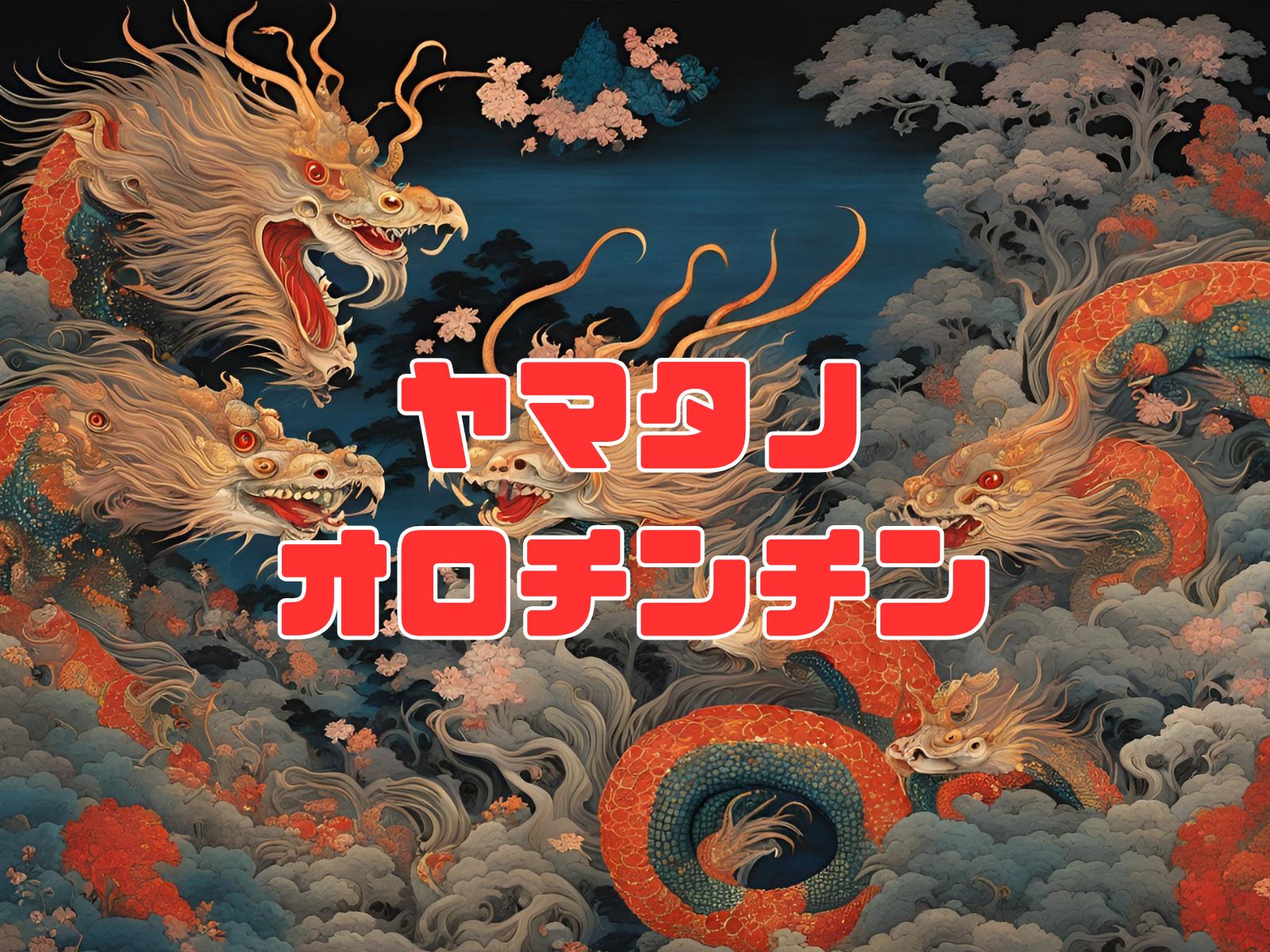
"Yamata no Orochinchin" (ヤマタノオロチンチン) is a viral Japanese internet slang term that suddenly trended on social media platform X (formerly Twitter) on January 16, 2025.
While this highly bizarre phrase immediately evokes a crude, humorous impression, it is a clever linguistic parody of the legendary creature "Yamata no Orochi" (八岐大蛇) from traditional Japanese mythology, blended with the childish Japanese slang for the male genitalia ("Chinchin").
What is "Yamata no Orochi"?
To understand the cultural etymology of "Yamata no Orochinchin," one must first examine the original mythological beast, Yamata no Orochi.
Yamata no Orochi is a colossal, eight-headed and eight-tailed dragon or serpent monster appearing in ancient Japanese chronicles. In the Kojiki (Records of Ancient Matters), it is written as 八俣遠呂智, while in the Nihon Shoki (Chronicles of Japan), it is documented as 八岐大蛇.
The legendary tale begins when the storm god Susanoo-no-Mikoto, after being banished from the heavenly realm (Takamagahara), descends to the land of Izumo. There, he encounters an elderly couple weeping bitterly. They explain that they once had eight daughters, but every year Yamata no Orochi came to devour one, and now they were about to sacrifice their last remaining daughter, Kushinadahime.
Yamata no Orochi was described as an incredibly terrifying beast, possessing eight heads, eight tails, and a massive body that straddled eight valleys and hills. Moss, cypress, and cedar trees grew on its back, its underbelly was constantly raw and inflamed with blood, and its eyes glowed a piercing, cherry-like red.
Susanoo-no-Mikoto wittily devised a cunning plan: he instructed the couple to brew a highly potent, eight-fold refined sake and place it in eight separate vats. Lured by the scent, the giant serpent dipped each of its eight heads into the vats, drank deeply, and fell into a heavy stupor. Susanoo then sliced the sleeping monster to pieces, saving the maiden. From the monster's tail, he retrieved a legendary sword, which later became the sacred imperial treasure known as the Kusanagi-no-Tsurugi.
The Viral Origin of "Yamata no Orochinchin"
While the abstract wordplay likely existed in schoolyards, the precise catalyst that turned "Yamata no Orochinchin" into a massive, national viral trend was a highly hilarious post shared on X by creator Kinka Takano, describing a bizarre dream:
昨日見た夢、チンチンが八つ束になった化け物が出てきて、隣にいた白衣着た博士みたいな感じの男がクソ真面目に「そんな、どうしてヤマタノオロチンチンが……」とか言うし私も私で「ダメだ……。もうおしまいだ……」とか真顔で言ってた。
ダメなのは疲労でイカれたお前の頭だよ。
— 金華高乃@C105お疲れ様でした! (@kinkatakano) January 15, 2025
*(Translation of the tweet: "In the dream I had last night, a monster appeared with eight penises bundled together. A man standing next to me, looking like a dead-serious scientist in a white lab coat, solemnly muttered, 'No way... How could a Yamata no Orochinchin be here...?' and I, with a completely straight face, replied, 'It's no use... We are finished...' What was actually finished was my own brain, driven mad by sheer exhaustion.")*
This absurd, dream-inspired dialogue resonated deeply with netizens, capturing millions of views and triggering a massive cascade of fan-art, memes, and linguistic parodies that dominated Japan's social media timelines for days.
Important Etiquette and Sourcing Warnings
"Yamata no Orochinchin" remains strictly an informal, highly crude internet slang. It is highly recommended to completely avoid using this term in formal business discussions, public speeches, or when communicating with superiors.
Depending on the context, it may trigger discomfort or be perceived as highly offensive. Particularly in spaces where respect for traditional Japanese mythology, folklore, or Shinto shrines is expected, utilizing this parody is considered highly inappropriate.
Historical Precedent: "Yamara no Orochi" in Edo-Period Shunga
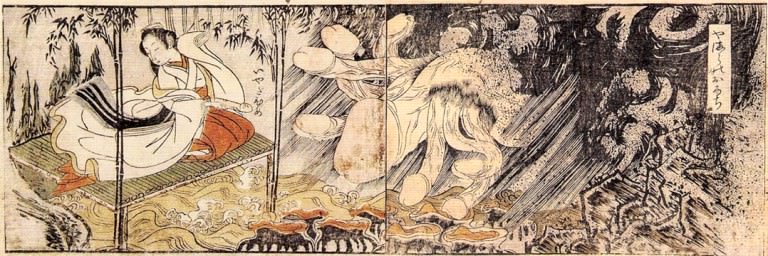
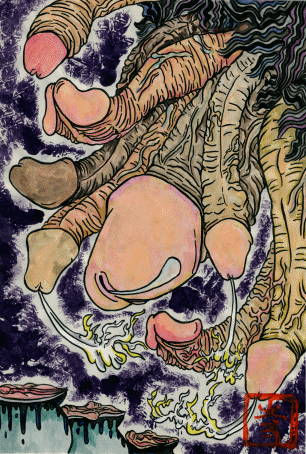
Intriguingly, while modern netizens treated "Yamata no Orochinchin" as a novel 2025 internet joke, Japanese art history reveals a highly fascinating historical precedent. In the Edo period, popular erotic artbooks known as Shunga (春画)—specifically the work Momo-Katari (百慕々語)—featured a highly similar mythological parody monster officially named "Yamara no Orochi" (やまらのおろち).
https://tyz-yokai.blog.jp/archives/1010654352.html
In these historic illustrations, the monster is depicted as a giant phallic Yokai split into eight separate shafts, showcasing that blending mythological monsters with crude, playful humor is a deeply rooted Japanese artistic tradition dating back hundreds of years.
"Yamata no Orochinchin" (ヤマタノオロチンチン) is a highly bizarre, viral Japanese internet slang that parodies the legendary mythological serpent Yamata no Orochi.
While appearing as a simple, modern social media joke, its striking visual similarity to the "Yamara no Orochi" found in Edo-period Shunga shows a brilliant, continuous thread of playful, phallic humor in Japanese art history.
Just be sure to keep this slang strictly confined to informal online chats, as using it in polite society is a major red flag! I hope this cultural and historical guide brings a smile to your face!
About "Yamata no Orochinchin (ヤマタノオロチンチン - Yamata no Orochinchin: Japanese internet slang, mythological etymology of Yamata no Orochi, and Edo-period Shunga traditions)"
This page provides the English definition and usage guide for the professional term "Yamata no Orochinchin (ヤマタノオロチンチン - Yamata no Orochinchin: Japanese internet slang, mythological etymology of Yamata no Orochi, and Edo-period Shunga traditions)." If you have any suggestions, feedback, or corrections regarding our terminology articles, please feel free to reach out via our contact form.