Inventory Count (棚卸し - Stocktaking in Food Service: Procedures, Cost Calculations, Waste Reductions, and Management Tools)
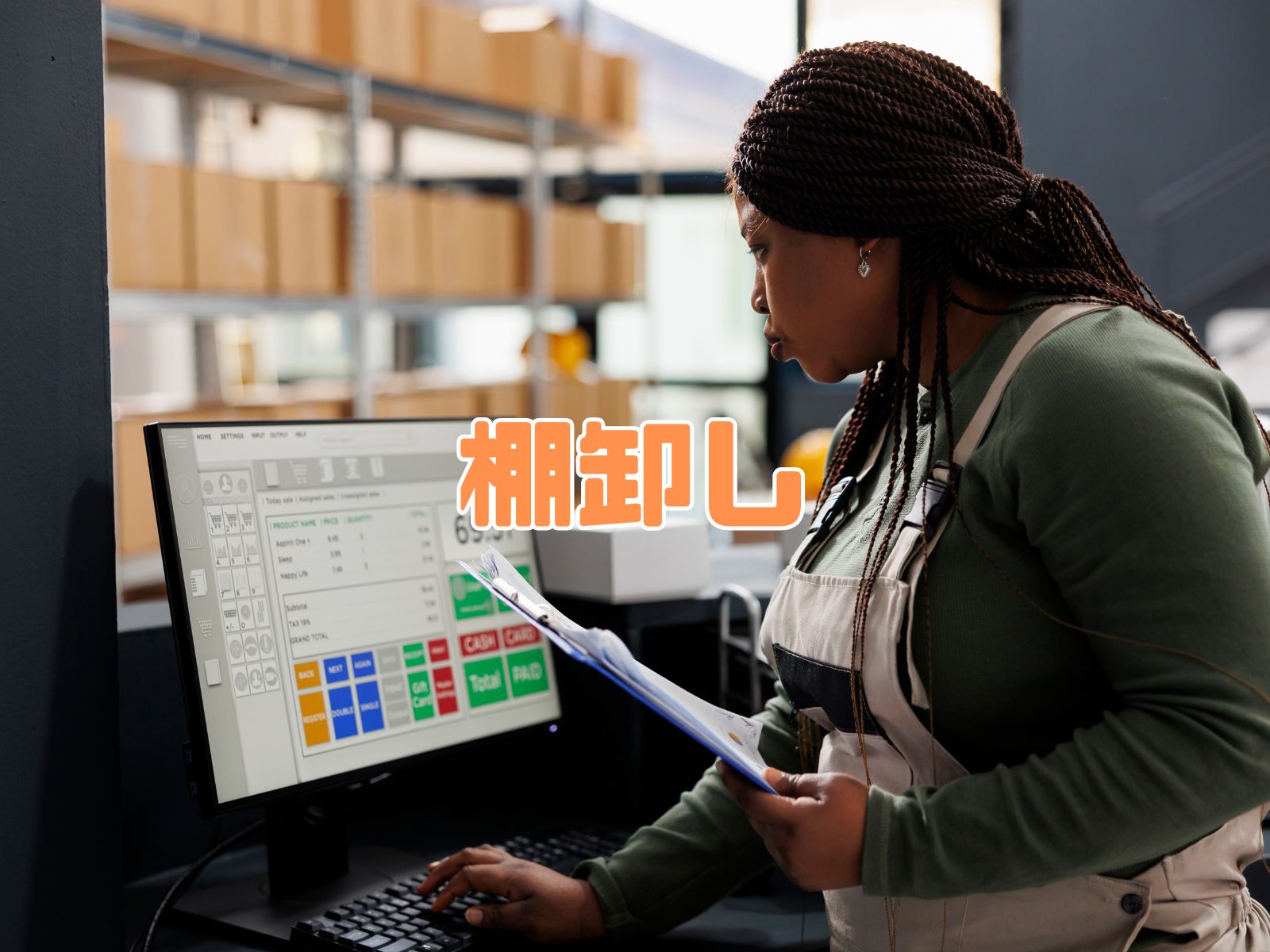
"Stocktaking" (棚卸し - Tanaoroshi), or an Inventory Count, refers to the periodic operational task of physically counting actual quantities of stock on hand (ingredients, beverages, disposables, etc.) and cross-checking them against current bookkeeping records.
In restaurant and food service management, this is a highly critical operation required for precise cost calculations and inventory control.
Core Objectives of Stocktaking
The primary financial and operational reasons for conducting an inventory count include:
- Precise Quantity Verification:
Understanding exact on-hand stock levels prevents overstocking (which ties up cash flow) and understocking (which causes menu item shortages), facilitating optimal purchase ordering. - Accurate Cost Calculation:
Measuring exact ingredient consumption enables the finance team to calculate the precise Cost of Goods Sold (COGS). - Shrinkage Assessment and Control:
Identifying discrepancies between book records and physical counts helps detect food waste, theft, spoilage, or portioning issues, leading to active cost savings. - Loss Prevention:
Establishing routine counts serves as a strong deterrent against employee theft, unauthorized consumption, or internal fraud. - Accurate Financial Reporting:
Precise asset valuations are critical to compiling accurate balance sheets and measuring overall business profitability.
Classifications of Inventory Counts
Depending on frequency and scope, stocktaking is categorized into two main types:
- Monthly Inventory Count (月次棚卸し)
A routine, monthly physical count conducted at the close of business on the final day of each month to calculate monthly profit and loss. - Annual Physical Inventory (実地棚卸し)
A comprehensive, large-scale audit of all company assets conducted once or twice a year, typically at the fiscal year-end for tax compliance and official financial statements.
Step-by-Step Stocktaking Procedure
While exact methods depend on restaurant scale and layout, a standard commercial count follows this structured workflow:
-
1. Preparation:
- Define the exact count date, schedule, assigned personnel, and responsibilities.
- Print out inventory sheets, set up clipboards, and prepare weighing scales or scanners.
- Organize storerooms, walk-ins, and dry shelves so items are neatly stacked and easy to count.
-
2. Physical Counting (Audit):
- Physically measure every item on the floor and record exact quantities on the count sheets.
- Utilizing two-person teams (one caller, one writer) drastically reduces clerical and mathematical errors.
- Identify and officially log any expired, spoiled, or damaged ingredients for official write-off waste sheets.
-
3. Data Aggregation & Entry:
- Summarize the handwritten inventory sheets and input the raw data into the POS or inventory database.
-
4. Reconciliation:
- Cross-reference the calculated physical quantities against the system's theoretical book inventory.
-
5. Variance Analysis:
- Identify any discrepancies (variances) between the book records and the actual counts to discover their root causes.
- Common sources of variance include double-counting errors, POS entry mistakes, unchecked waste, or employee theft.
-
6. Asset Valuation:
- Calculate the total financial value of the physical inventory based on current purchase costs.
-
7. Reporting:
- Compile the audit results into a formal report to present to general managers, accountants, and investors.
Real-World Dialogue and Industry Contexts
-
"We have the monthly inventory count scheduled for the end of the month, so I might have to work some overtime."
Informing a coworker or family member about the typical end-of-month workload. -
"Our inventory count revealed a significant amount of food waste and shrinkage."
Reporting to management that actual stock levels were much lower than book values. -
"Please enter the physical stock counts on the inventory sheet."
Instructing a team member to record counts on the official audit sheet. -
"Investigate the root cause of these inventory variances and report back to me."
Directing a supervisor to locate the errors causing book-to-physical discrepancies. -
"We are legally required to conduct a full physical inventory count once a year."
Explaining corporate tax compliance rules to new staff. -
"Stocktaking is a vital operation required to achieve precise cost accounting."
Explaining that regular physical audits are essential to calculate exactly how many ingredients and beverages have been utilized.
Methods to Optimize Stocktaking Operations
- Implementing Inventory Management Software
Automates calculations and synchronizes real-time purchases with POS systems to minimize manual errors. - Barcoding and Scanners
Utilizing handheld terminals or mobile scanning apps dramatically accelerates counting speed and directly inputs data into databases. - Outsourcing to Auditing Services
Hiring third-party inventory specialists to conduct high-speed, professional counts, freeing up restaurant staff. - Strict Organization
Maintaining clean, labeled storerooms and rotating stock daily ensures physical counts can be executed in half the time. - Routine Auditing
Organizing smaller, weekly "cycle counts" for high-cost items (e.g., meat, liquor) resolves discrepancies before they compound.
Key Inventory Terminology
- Inventory Management: The systematic process of ordering, storing, and tracking ingredients and materials.
- Cost Accounting (COGS): Calculating the direct costs involved in producing food and beverage menu items.
- FIFO (First-In, First-Out): A stock rotation practice where older ingredients are utilized first to prevent spoilage.
- Physical Count: The hands-on auditing of actual inventory units on the shelves.
- Book Inventory: The theoretical stock levels recorded in ledger books or accounting databases.
- Inventory Variance: The numerical difference between the theoretical book stock and the actual physical count.
- Shrinkage / Waste: Financial losses stemming from food spoilage, spillages, theft, or portioning mistakes.
Far from just a chore, it is the cornerstone of accurate cost control, profit calculation, waste reduction, and fraud prevention, serving as an absolute necessity for healthy business operations.
I hope this guide helps you master the mechanics of inventory auditing to ensure a highly efficient, profitable workplace!
About "Inventory Count (棚卸し - Stocktaking in Food Service: Procedures, Cost Calculations, Waste Reductions, and Management Tools)"
This page provides the English definition and usage guide for the professional term "Inventory Count (棚卸し - Stocktaking in Food Service: Procedures, Cost Calculations, Waste Reductions, and Management Tools)." If you have any suggestions, feedback, or corrections regarding our terminology articles, please feel free to reach out via our contact form.