Megaberg (The Science and Climate Impact of Giant Icebergs)
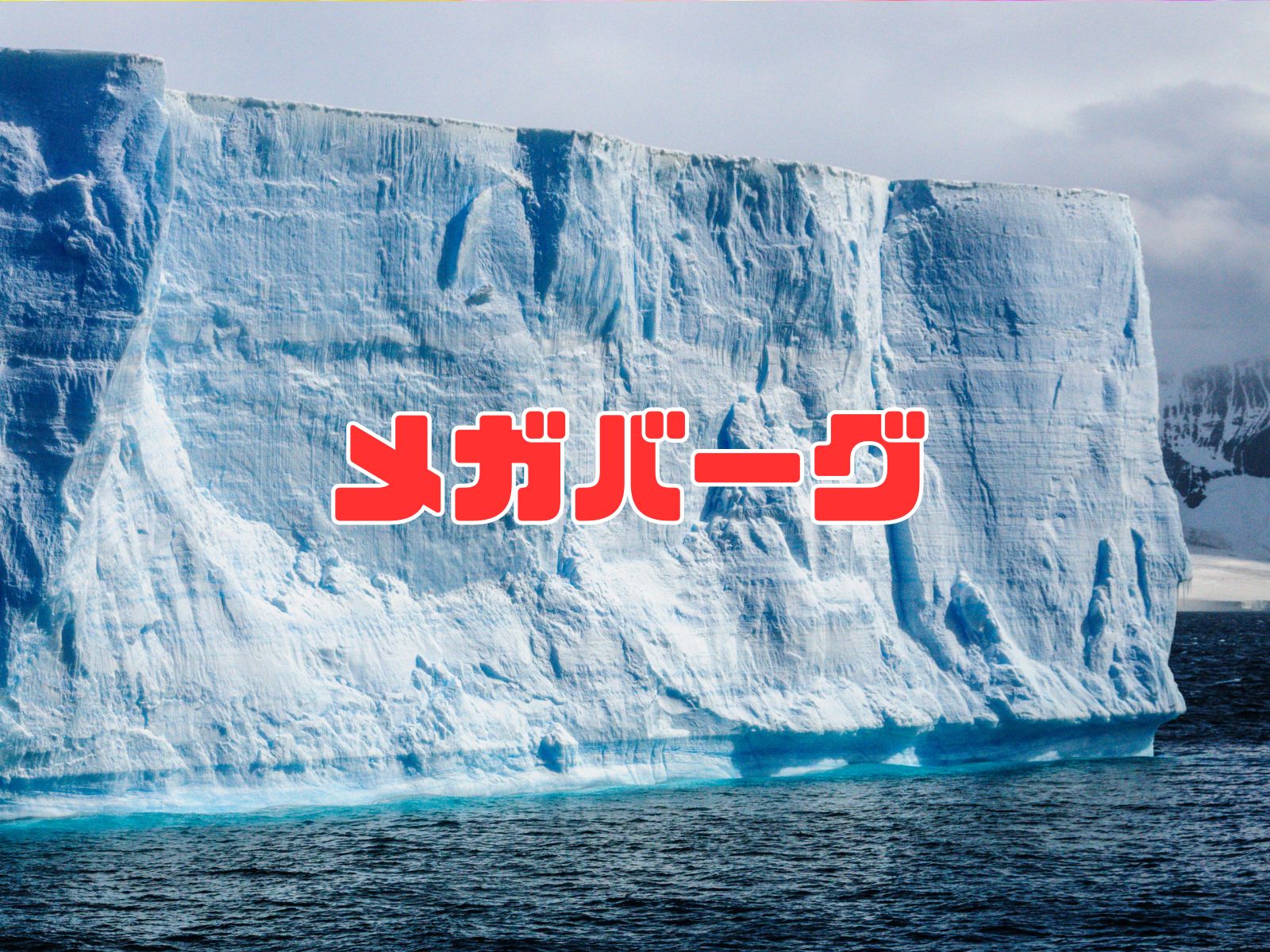
In recent decades, the accelerating effects of global warming have caused increasingly frequent separations of colossal ice masses from the Antarctic ice sheet, drifting out into the open ocean.
Among these floating ice structures, the absolute giants are classified as "Megabergs" (メガバーグ). With surface areas that can easily dwarf major global cities, megabergs exert profound, long-term impacts on marine biology, deep ocean currents, and global climate systems.
Though often appearing completely static, these massive ice islands are continuously guided by deep ocean currents and wind patterns, introducing rapid, dramatic changes to the environments they encounter.
In this article, we explore the definition, calving mechanics, ecological impacts, and notable historical examples of megabergs.
What is a Megaberg?
A Megaberg is defined by glaciologists as a tabular iceberg with a surface area exceeding 100 square kilometers—roughly half the size of Tokyo, and clearly visible from space orbits.
Megabergs detach from continental ice sheets or floating ice shelves, reaching thicknesses of several hundred meters and carrying trillions of tons of freshwater. These colossal structures can drift across the Southern Ocean for years, traveling thousands of miles before fully melting.
The Glaciological Calving Process
Megabergs are formed through a process known as "Calving" (カービング), the natural fracturing and shedding of ice at the terminus of a glacier or ice shelf. Calving begins when deep structural crevasses develop in the ice shelf. As seawater enters these crevasses, hydrostatic pressure widens the fractures. Eventually, the structural bond fails, and a megaberg separates.
Under the influence of rising global temperatures, warmer ocean waters are melting ice shelves from below, accelerating fracturing rates and causing a marked increase in the frequency of megaberg calving events.
Socio-Environmental Impacts of Megabergs
Megabergs act as powerful, dynamic agents of change in the global ocean ecosystem:
Altering Deep Ocean Currents
Due to their immense underwater drafts (often extending hundreds of meters deep), megabergs act as massive physical barriers, redirecting local ocean currents. Since currents are responsible for transporting heat and vital nutrients globally, these blocks can alter regional marine climates.
Marine Ecological Disruptions
As a megaberg drifts, it lowers local sea temperatures and drastically alters salinity levels. While this can disrupt localized marine life, the greatest threat occurs when a megaberg runs aground near sub-Antarctic islands, blocking the foraging paths of native wildlife. For example, in 2004, the grounding of Megaberg A38 near South Georgia Island completely blocked access to feeding grounds for millions of penguins and seals, resulting in severe wildlife mortality.
Massive Freshwater Injection
Megabergs store massive reserves of pure freshwater. As they melt in warmer currents, they dump trillions of gallons of freshwater into the salty ocean. This lowers water density, potentially weakening the global thermohaline circulation (the ocean conveyor belt).
Iron Fertilization and Carbon Sequestration
Intriguingly, megaberg melting has a positive environmental side effect. As glaciers grind against continental bedrock, they trap mineral-rich dust. When a megaberg melts, it releases this iron-rich dust, acting as a natural fertilizer. This iron triggers massive blooms of marine phytoplankton, which absorb atmospheric carbon dioxide through photosynthesis, indirectly aiding in global carbon sequestration.
Notable Historic Megabergs
Several historically significant megabergs have been tracked by satellite monitoring:
| Iceberg Designation | Calving Year | Surface Area (sq km) | Origin Ice Shelf | Notable Characteristics |
|---|---|---|---|---|
| A23a | 1986 | 3,900 | Filchner Ice Shelf | Remained grounded on the Antarctic seabed for 37 years before drifting in 2020. It once carried a Soviet research station on its surface. |
| A68a | 2017 | 5,800 | Larsen C Ice Shelf | Drifted dangerously close to South Georgia Island, prompting severe ecological concern before fracturing. |
| B15 | 2000 | 11,000 | Ross Ice Shelf | The largest recorded megaberg in satellite history, matching the surface area of Jamaica. |
Remote Sensing and Scientific Observation
Glaciologists monitor megabergs primarily through advanced synthetic aperture radar (SAR) satellites, which can track iceberg movements through heavy polar clouds and winter darkness. Satellite altimeters like ICESat-2 measure iceberg freeboard height to calculate total volume and melt rates.
Case Studies: Giant Freshwater Discharges
Recent telemetry data has allowed scientists to model freshwater discharges with high precision. During its drift near South Georgia in 2020-2021, Megaberg A68a discharged a colossal 152 billion tons of freshwater into the local ecosystem—an amount 20 times the volume of Loch Ness—fundamentally altering sea surface salinity and localized marine food webs.
Conclusion
Megabergs are awe-inspiring glaciological structures that serve as major, dynamic forces in global oceanography and climatology. Driven by rising atmospheric and oceanic temperatures, their calving frequency is expected to climb, presenting both severe local ecological disruptions and global nutrient fertilization opportunities.
Developing precise satellite tracking and thermodynamic models is crucial to safeguard commercial shipping, evaluate changes in global thermohaline circulation, and deepen our understanding of polar ice sheet dynamics in a rapidly warming world.
About "Megaberg (The Science and Climate Impact of Giant Icebergs)"
This page provides the English definition and usage guide for the professional term "Megaberg (The Science and Climate Impact of Giant Icebergs)." If you have any suggestions, feedback, or corrections regarding our terminology articles, please feel free to reach out via our contact form.