Great Earthquakes in Japan (Historical Rankings, Magnitude, and Disaster Preparedness)
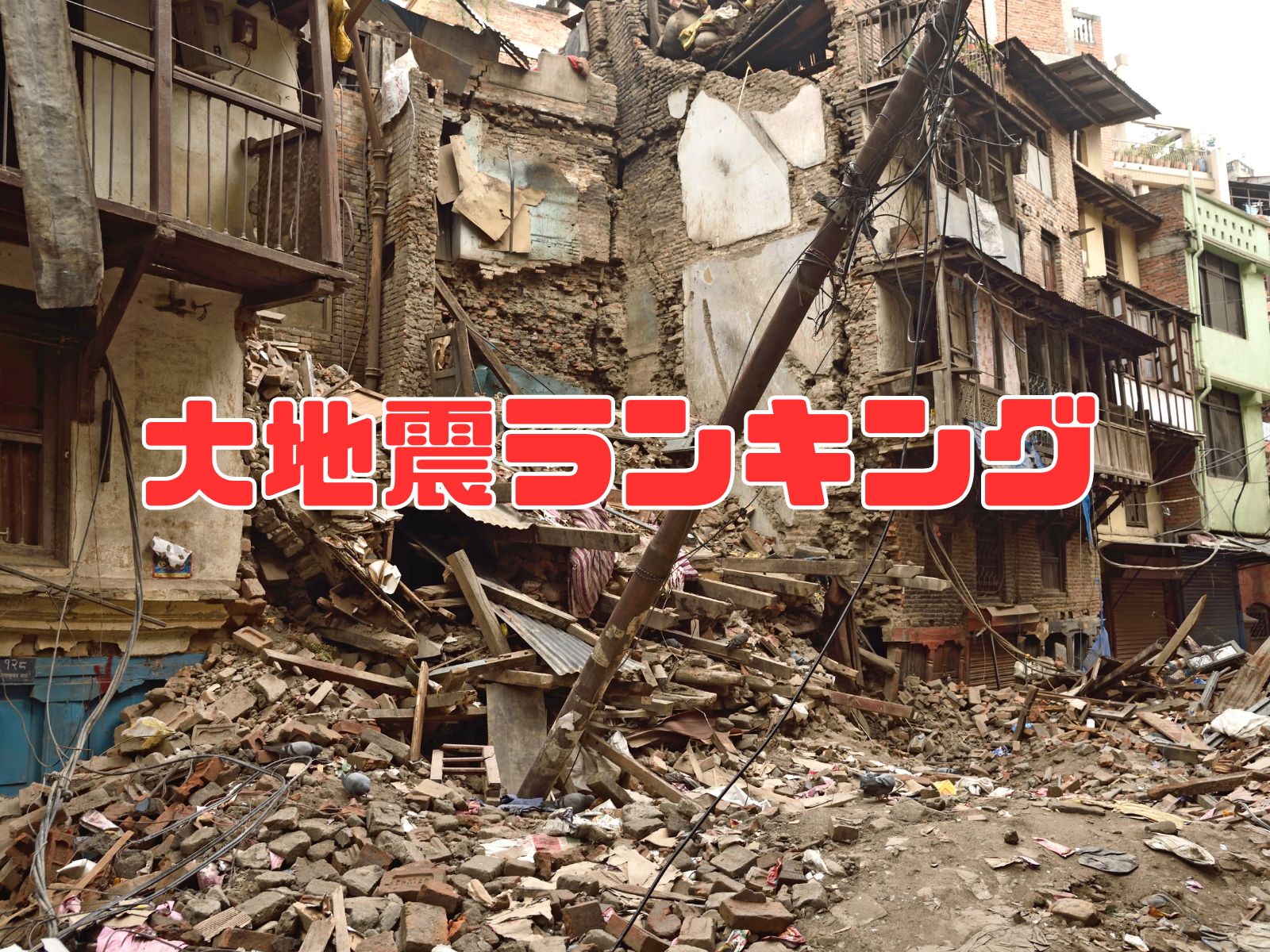
In recent years, major earthquakes have struck various parts of Japan, making systematic disaster preparedness increasingly critical.
The "Historical Earthquake Rankings in Japan" is highly valuable information that helps us recognize the ongoing threat of seismic disasters and elevates our disaster awareness by comparing the scale and casualties of past events.
This article examines these rankings from a seismological perspective, detailing their criteria, their significance and limitations, and how to utilize them for household disaster mitigation.
What is the "Historical Earthquake Ranking in Japan"?
This ranking sorts earthquakes that have occurred across Japan by their physical scale or the scale of damage. The primary criteria used for these rankings include:
- Magnitude (M): A metric showing the energy released at the earthquake's source. An increase of 1.0 represents roughly 32 times more energy released.
- Seismic Intensity (Shindo): Measures the strength of ground shaking at a specific point. The scale peaks at Intensity 7.
- Damage Scale: The number of deaths, injuries, or destroyed buildings.
Key Metrics and Their Significance
The ranking of an earthquake changes drastically depending on which metric is prioritized. For example, by Magnitude, the 2011 Off the Pacific Coast of Tohoku Earthquake (Great East Japan Earthquake) ranks 1st. However, by casualties, the 1923 Great Kanto Earthquake ranks 1st.
It is vital to understand the characteristics of each metric when viewing these rankings.
-
Magnitude (M)
Measures the total physical energy released by the earthquake. Larger magnitudes mean the seismic waves propagate over a much broader area.
Since Japan is economically highly developed, high-magnitude quakes can trigger catastrophic economic and infrastructure losses. -
Seismic Intensity
Measures local shaking. It is determined by the magnitude, the depth of the epicenter, and local geological features. A lower-magnitude shallow quake close to a major city can trigger severe local intensity and devastating damage. -
Damage Scale
Evaluates casualties, destroyed structures, and total economic loss. It is heavily influenced by population density, building structural standards, and local emergency prep levels rather than physical magnitude alone.

【PR】いざという時のための防災セット
・38品目全44アイテムで準備万端
・72時間分の備え
・防災マニュアル付きで安心
・安心のサバイバルセット
Historical Earthquake Rankings in Japan
Below are rankings based on historical data, categorized by Magnitude and Casualty figures.
Ranked by Magnitude (M)
| Rank | Earthquake Name | Year | Magnitude (M) | Casualties (Deaths) |
|---|---|---|---|---|
| 1 | Great East Japan Earthquake | 2011 | 9.0 | Approx. 18,446 |
| 2 | Tokachi-oki Earthquake | 1952 | 8.2 | 52 |
| 3 | Hokkaido Toho-oki Earthquake | 1994 | 8.1 | 230 |
| 3 | Sanriku Earthquake & Tsunami | 1933 | 8.1 | 3,064 |
| 5 | Nobi Earthquake | 1891 | 8.0 | 7,273 |
| – | Reiwa 6 Noto Peninsula Earthquake | 2024 | 7.6 | 489 |
| – | Great Hanshin-Awaji Earthquake | 1995 | 7.3 | 6,437 |
Ranked by Casualties (Deaths)
| Rank | Earthquake Name | Year | Magnitude (M) | Casualties (Deaths) |
|---|---|---|---|---|
| 1 | Great Kanto Earthquake | 1923 | 7.9 | Over 105,000 |
| 2 | Meiji Sanriku Earthquake | 1896 | 8.2 | 21,959 |
| 3 | Great East Japan Earthquake | 2011 | 9.0 | Approx. 18,446 |
| 4 | Nobi Earthquake | 1891 | 8.0 | 7,273 |
| 5 | Great Hanshin-Awaji Earthquake | 1995 | 7.3 | 6,437 |
| 6 | Fukui Earthquake | 1948 | 7.1 | 3,769 |
| – | Reiwa 6 Noto Peninsula Earthquake | 2024 | 7.6 | 489 |
As these rankings indicate, physical magnitude does not linearly correlate with casualties. Damage is heavily determined by factors like epicenter location, timing, population density, and building structural integrity.
Major Recent Damaging Earthquakes (Heisei 28 onwards)
According to records, major damaging earthquakes that have struck Japan in recent years include:
| Date | Epicenter / Name | M | Max Intensity | Tsunami | Human Casualties | Building Damage |
|---|---|---|---|---|---|---|
| April 17, 2024 | Bungo Channel | 6.6 | 6-Lower | None | 16 Injured | 10 Partially Damaged |
| April 3, 2024 | Near Taiwan | 7.7 | 4 (Japan) | 27cm | 2 Injured (Japan) | None |
| April 2, 2024 | Iwate Coastal Northern | 6.0 | 5-Lower | None | 2 Injured | None |
| March 15, 2024 | Off Fukushima | 5.8 | 5-Lower | None | 4 Injured | None |
| January 1, 2024 | 石川県能登地方 Noto Peninsula Earthquake | 7.6 | 7 | 80cm | 241 Dead, 1,299 Injured | 8,789 Destroyed, 18,813 Semi-destroyed, 83,154 Partially damaged |
| June 11, 2023 | Off Tomakomai | 6.2 | 5-Lower | None | 1 Injured | None |
| May 11, 2023 | Southern Chiba | 5.2 | 5-Upper | None | 8 Injured | 77 Partially Damaged |
| May 5, 2023 | Off Noto Peninsula | 5.9 | 5-Upper | None | 1 Dead, 52 Injured | 40 Destroyed, 313 Semi-destroyed, 3,073 Partially damaged |
| May 5, 2023 | Off Noto Peninsula | 6.5 | 6-Upper | None | 1 Dead, 52 Injured | 40 Destroyed, 313 Semi-destroyed, 3,073 Partially damaged |
| November 9, 2022 | Southern Ibaraki | 4.9 | 5-Upper | None | 1 Injured | None |
Significance and Limitations of Rankings
Earthquake rankings consolidate complex historical data into accessible records, stimulating public interest and strengthening community safety awareness. Applying lessons from past disasters helps us prepare for future scenarios.
However, rankings have distinct limits. They reflect past data and cannot predict future seismic triggers. Mid-scale earthquakes not highlighted on these lists can still inflict catastrophic local damage. Experts warn that major earthquakes can strike anywhere across Japan outside of long-anticipated sectors like the Nankai Trough.
Applying Ranking Data to Practical Preparedness
Historical data aids active safety actions. Residents can utilize this information to secure their environments:
| Action | Description |
|---|---|
| Identify Local Seismic Risks | Review historical epicenter scopes and soil profiles to evaluate what kinds of quakes and damage are anticipated in your local area. |
| Execute Sturdy Home Reinforcements | Visualize the actual structural damage associated with major quakes to secure heavy furniture, clear evacuation paths, and prepare emergency survival kits. |
| Coordinate Community Emergency Drills | Use historical quakes as discussion starters within families and neighborhoods to map out evacuation areas, emergency contacts, and disaster drills. |
Summary
Seismic rankings are valuable tools for recognizing the physical power of earthquakes and strengthening our home disaster safety measures. They remain references for assessing local geological risks and taking proper protective actions rather than absolute prognostic tools.
Tectonic tremors strike without warning. As a highly active country, maintaining emergency survival supplies, conducting drills, and building scientific awareness are key to mitigating hazards when the ground begins to shake.
About "Great Earthquakes in Japan (Historical Rankings, Magnitude, and Disaster Preparedness)"
This page provides the English definition and usage guide for the professional term "Great Earthquakes in Japan (Historical Rankings, Magnitude, and Disaster Preparedness)." If you have any suggestions, feedback, or corrections regarding our terminology articles, please feel free to reach out via our contact form.