Tabular Iceberg (Antarctic Glaciology, Formation, and Ocean Circulation)
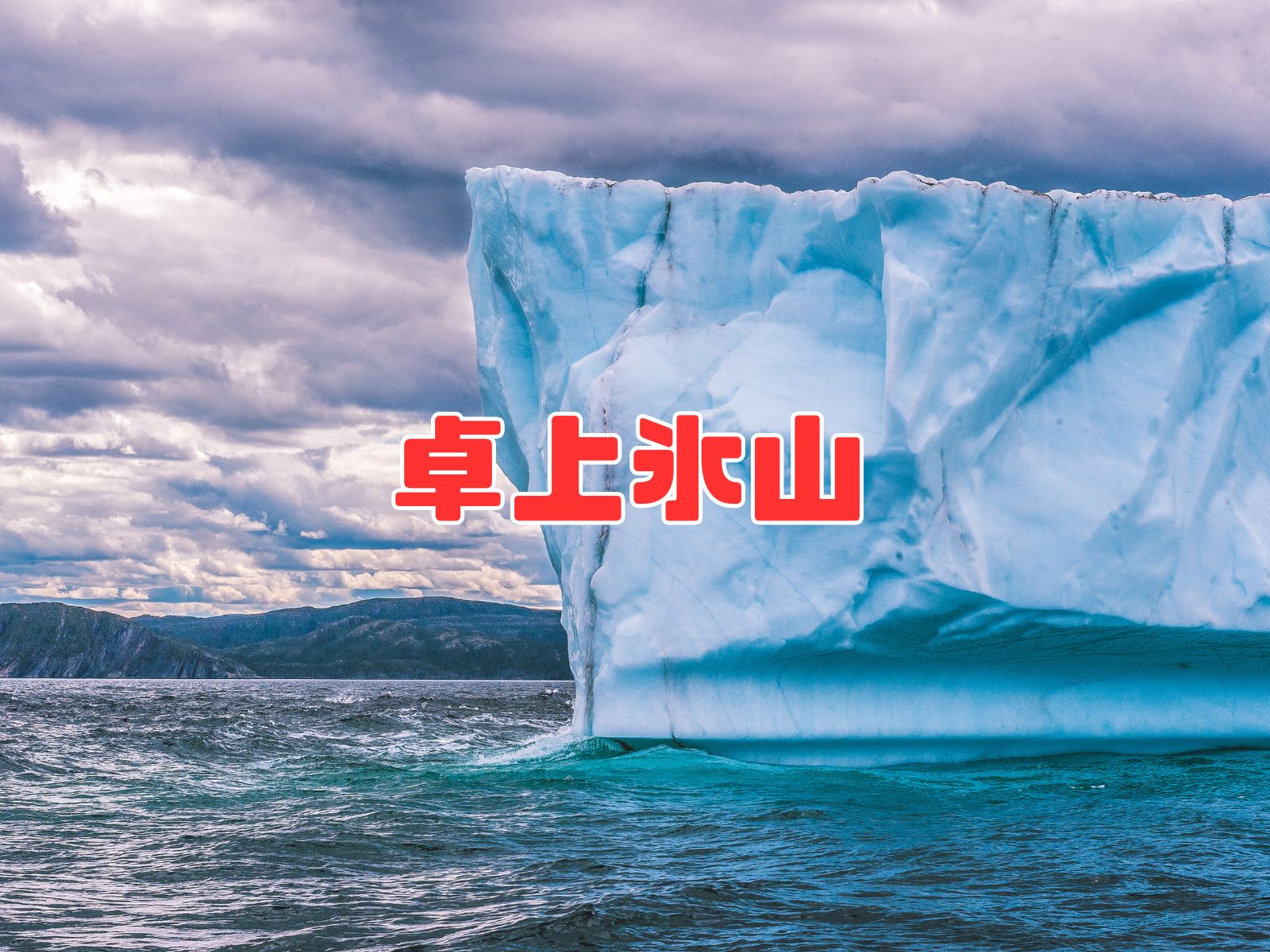
When traveling the Antarctic seas, amidst the majestic scenery, you may spot an iceberg that looks just like a colossal table.
This is a "tabular iceberg" (卓状氷山), a distinctive type of iceberg characteristic of the Antarctic.
In this article, we will explore the definition, shape, formation process, and key differences from other icebergs, as well as the significant impacts tabular icebergs have on marine ecosystems and global climate.
Definition of a Tabular Iceberg
A tabular iceberg is a massive iceberg characterized by a flat, level top. As the name suggests, its table-like shape has also earned it the name "table iceberg."
They are commonly found in the Southern Ocean, and some are truly colossal structures reaching thicknesses of up to 1,000 meters.
By definition, to be classified as an iceberg, a floating ice mass must have a surface area of at least 100 square meters and rise at least 5 meters above the sea surface.
Shape and Scale of Tabular Icebergs
Tabular icebergs feature a flat upper surface and nearly vertical, cliff-like sides. They resemble giant rectangular or square slabs of floating ice.
While they vary widely in size, they typically measure 200 to 1,000 meters in width and rise 50 to 80 meters in height above sea level.
However, some giants reach up to 100 meters in height and span 150 kilometers in width.
In March 2000, a record-breaking tabular iceberg designated B15 calved from the Ross Ice Shelf, measuring 286 kilometers in length and 40 kilometers in width.
This massive iceberg spanned 11,000 square kilometers, roughly five times the size of Tokyo.
A key characteristic of tabular icebergs is that their submarine portion is far larger than the visible portion above water.
In a typical tabular iceberg, the ratio of the height above sea level to the depth below water is approximately 1 to 5.
The Glaciological Formation Process
Tabular icebergs are formed by calving off from the vast ice shelves that surround the Antarctic continent.
An ice shelf is a thick, floating platform of ice that forms where a land-based glacier or ice sheet flows down to the coastline and onto the ocean surface.
Ice shelves grow as accumulating snow compresses into glacial ice, slowly moving toward the sea under its own weight.
When the edge of an ice shelf pushes far into the ocean, the forces of waves and ocean currents cause it to fracture, shedding massive tabular icebergs into the sea.
While tabular icebergs typically calve from ice shelves, they can also separate from ice tongues, which are the floating extensions of valley glaciers.
When a tabular iceberg calves, it often shears along structural weaknesses, resulting in geometric shapes with relatively clean, flat edges.
Once formed, some robust tabular icebergs can maintain their structural integrity for over a decade before fully melting or breaking apart.
Sea ice plays a vital supporting role in the stability and formation of ice shelves.
Sea ice forms when seawater freezes and covers vast expanses of the polar ocean during winter.
Driven by winds and currents, sea ice collides and rafts, growing into thick ice floes. The accumulation of these floes along the coastline helps stabilize the seaward fronts of ice shelves.
Key Differences Between Tabular Icebergs and Other Iceberg Types
Glaciologists classify icebergs by their shape into tabular icebergs, domed icebergs, sloping icebergs, pinnacled icebergs, drydock icebergs, and irregular blocky icebergs.
| Iceberg Type | Structural Characteristics | Primary Distribution |
|---|---|---|
| Tabular | Flat upper surface with vertical, cliff-like sides | Southern Ocean (Antarctica) |
| Domed | Rounded, dome-like upper surface | Both Polar Regions |
| Sloping | Features one gradually sloping face | Both Polar Regions |
| Pinnacled | Features sharp, towering spires or columns | Arctic Ocean |
| Drydock / Weathered | Highly eroded by waves and wind, featuring natural arches or channels | Both Polar Regions |
| Blocky / Glacial | Irregular, steep-sided blocky shapes | Both Polar Regions |
The flat upper surface is the defining feature of tabular icebergs, making them easily distinguishable from other types.
This flat geometry enhances their thermodynamic stability and influences their melting rate.
Compared to irregular icebergs, tabular icebergs are highly resistant to capsizing, and their massive surface area efficiently reflects solar radiation, helping slow down their melt rate.
Generally, tabular icebergs dominate the Antarctic, whereas pinnacled icebergs are more common in the Arctic. However, Antarctic tabular icebergs can fracture into pinnacled shards, and Canadian ice shelves (like Ellesmere Island) or northern Greenland ice shelves can occasionally produce Arctic tabular icebergs.
Why Tabular Icebergs Cluster Around Antarctica and Greenland
Because tabular icebergs require extensive, slow-moving ice shelves to form, they are predominantly found around Antarctica and parts of northern Greenland.
Antarctica hosts the world's largest ice shelves, such as the Ross Ice Shelf and the Filchner-Ronne Ice Shelf, which regularly calve these colossal tabular structures.
Most tabular icebergs calving from Antarctic shelves drift westward along the coastal currents, eventually flowing out of the Weddell Sea or Ross Sea toward lower latitudes.
In the western Weddell Sea, they are pushed northwestward, passing through the Antarctic Sound at the tip of the Antarctic Peninsula.
This channel is widely known as "Iceberg Alley" due to the high density of passing tabular giants.
Ecological and Climatic Impacts of Tabular Icebergs
Tabular icebergs act as major, dynamic agents in marine biology and global climate systems.
Impacts on Marine Ecosystems
- Nutrient Delivery (Iron Fertilization)
As tabular icebergs melt, they release mineral nutrients, particularly iron, trapped in the ancient glacial ice. This triggers massive phytoplankton blooms, fertilizing the regional marine food web. - Wildlife Habitats
Tabular icebergs serve as vital physical platforms for polar fauna, including seals and penguins, providing resting, nesting, and breeding grounds. - Altering Ocean Currents
Colossal tabular icebergs can act as massive physical barriers that alter local ocean currents. This redirection can disrupt the distribution and migration of krill and other marine organisms.
Climatic Feedback Effects
- Solar Albedo Feedback
The brilliant white surfaces of tabular icebergs reflect solar radiation back into space, helping cool the regional climate. - Ocean Thermohaline Cooling
Melting icebergs cool surrounding seawaters, which can influence regional currents and climate patterns. - Freshwater Injection
The release of colossal volumes of fresh water lowers sea surface salinity and water density. This freshwater capping can potentially slow down global ocean conveyor belt circulation.
Fascinating Historical Tabular Icebergs and Recent Research
- Colossal Dimensions:
The giant B15 iceberg, calving in March 2000, remains one of the largest tracked tabular icebergs, measuring 286 kilometers long and 40 kilometers wide. - Perfect Geometry:
In 2018, NASA photographed a remarkably sharp, rectangular tabular iceberg calving from the Larsen C Ice Shelf, illustrating the clean shearing of polar ice shelves. - The Saga of A23a:
Calving from the Filchner-Ronne Ice Shelf in 1986, A23a initially carried a Soviet research station (Druzhnaya I). It remained grounded on the seabed for over 30 years before beginning to drift again in 2020.
- Iceberg Calving and Climate Change:
While warming oceans accelerate ice shelf melting, scientists stress that major calving events are part of natural, cyclical glaciological processes. For instance, the Amery Ice Shelf undergoes a major calving cycle roughly every 60 to 70 years. - Icebreaker Exploration:
Modern icebreaker expeditions equipped with autonomous underwater vehicles (AUVs) are actively mapping the submarine structures of tabular icebergs to model their thermodynamic melt rates.
Conclusion
Tabular icebergs are among the most awe-inspiring sights of the Antarctic, reflecting the immense scale of Earth's polar processes. Separating from slow-growing ice shelves, these massive ice platforms drift across the oceans for years, influencing marine ecosystems, regional climates, and deep ocean circulation.
As global warming continues, the stability of polar ice shelves is under scrutiny, and accelerating calving rates could significantly impact global ocean conditions. Monitoring these colossal flat-topped structures remains vital for marine safety and climate forecasting.
Ongoing research using advanced satellite remote sensing and polar expeditions will continue to deepen our understanding of these frozen giants and their feedbacks within the global earth system.
About "Tabular Iceberg (Antarctic Glaciology, Formation, and Ocean Circulation)"
This page provides the English definition and usage guide for the professional term "Tabular Iceberg (Antarctic Glaciology, Formation, and Ocean Circulation)." If you have any suggestions, feedback, or corrections regarding our terminology articles, please feel free to reach out via our contact form.