Ataru (あたる - The Japanese Culinary Art of Seasoning Evaluation, Flavor Tuning, and Professional Kitchen Etiquette)
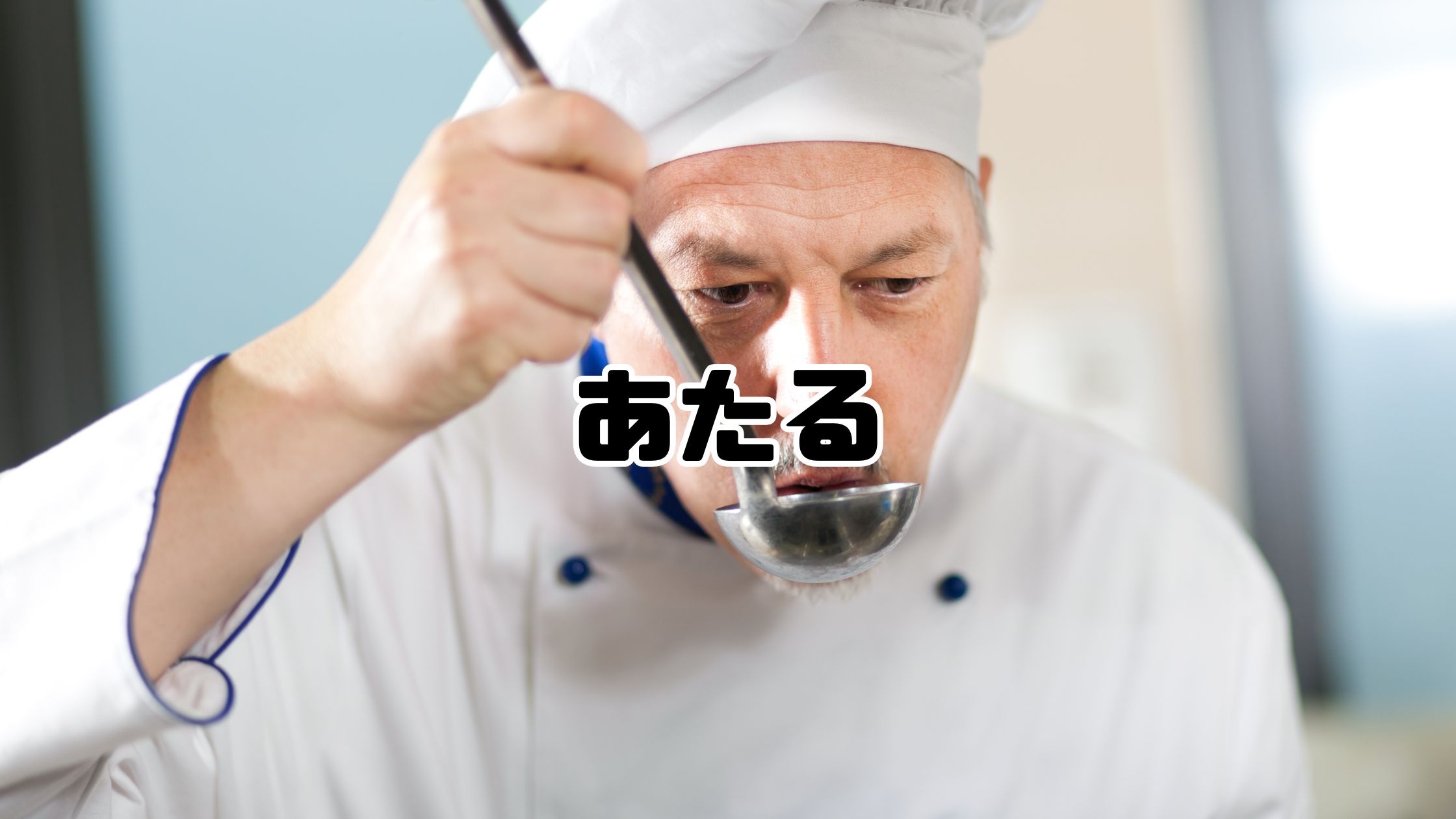
In professional Japanese kitchens, when a chef checks and adjusts the flavor profile of a dish, they use the term "Ataru" (あたる) instead of the standard word for tasting ("ajimi"). This professional culinary jargon refers specifically to evaluating, balancing, and adjusting the seasoning of a dish during the cooking process or immediately prior to table service.
The Archery Metaphor Behind "Ataru"
The use of "Ataru" originates from traditional Japanese archery (Kyudo) and target shooting, where the verb "ataru" means "to hit the bullseye" or "strike the target." Chefs adopted this term through a series of logical associations: aiming a shot at a target evolved into evaluating accuracy, which in turn became the act of checking if a dish's flavor perfectly hits its target seasoning profile. Thus, "ataru" came to represent the expert process of precision taste-testing and flavor balancing.
Practical Examples of "Ataru" in Professional Kitchens
- "Could you check the seasoning on this soup for me?" (ちょっとスープの味、あたってみて)
Used when a head chef instructs a sous chef or apprentice to verify the flavor balance of a broth during prep. - "Once you've adjusted the sauce and verified the flavor, turn off the heat." (ソース、あたったら火を止めて)
Used when instructing a line cook to run a final quality check on a reduction and stop the cooking process once the target taste is reached. - "Be sure to run a final taste check before plating the dish." (盛り付ける前に、一度あたってください)
Used to emphasize quality control protocols, ensuring no plate leaves the station without verification. - "This dressing has a bit too much acidity; let's add a pinch of sugar and adjust the balance." (このドレッシング、ちょっと酸味が強いから、砂糖を足してあたってみよう)
Used when actively adjusting a recipe's balance by adding ingredients and repeatedly verifying the flavor profile. - "Always run a flavor check on every dish before it is served to the customer." (お客様に出す前に、必ずあたるようにね)
Used by kitchen management to enforce strict quality control and consistency across all culinary stations. - "Perfectly balancing the salt profile in this traditional recipe is exceptionally difficult." (この料理、塩加減をあたるのが難しいんだよね)
Used by experienced chefs when discussing the subtle, professional difficulty of dialing in the exact seasoning of a delicate dish.
Key Operational Scenarios for "Ataru"
- During Active Cooking Operations
Continually monitoring, checking, and correcting the flavor balance as ingredients cook down, reduce, or integrate. - Immediately Prior to Service
Executing the final quality control check at the pass before a plate is carried out to the dining room. - Recipe Development and Testing
Systematically tasting, adjusting, and documenting ingredient ratios when crafting new seasonal menus or refining signature recipes.
Linguistic Equivalents and Culinary Distinctions
- Taste-Testing / Ajimi (味見をする)
The standard, everyday term for tasting food, used casually by home cooks and the general public. - Flavor Checking / Aji wo Miru (味を見る)
A widely used phrase that is functionally identical to "ataru," though slightly less specialized. - Tasting / Tasting (テイスティングする)
Typically reserved for evaluating beverages requiring specialized sensory training, such as wine, sake, or coffee. - Trial Tasting / Shishoku (試食する)
Refers to eating a portion of a completed dish to evaluate its overall presentation, texture, and taste. - Verifying the Seasoning / Aji wo Tashikameru (味を確かめる)
Checking to ensure that a dish meets standard flavor requirements and contains no operational defects. - Flavor Tuning / Aji wo Chousei Suru (味を調整する)
Actively adding salt, acids, sweeteners, or umami elements to correct and elevate the final flavor profile.
Crucial Context and Professional Etiquette for Using "Ataru"
- Exclusive to Professional Kitchens: "Ataru" is specialized industry jargon. It is used strictly among kitchen colleagues, apprentices, and suppliers. Chefs never use this term with customers (e.g., you would never tell a guest, "Please 'ataru' this dish").
- Regional Variations: While standard in traditional Kansai and Kanto high-end culinary circles (especially in traditional Japanese cuisine or Ryotei), some western regions or casual operations may rely on standard terms like "ajimi."
Derived from target archery's "hitting the bullseye," the term emphasizes the precision, experience, and high standards required to achieve the perfect seasoning.
It is a badge of professional craftsmanship, reinforcing that every plate served represents the kitchen's absolute dedication to consistency and excellence.
I hope this deep dive into traditional kitchen vocabulary enriches your appreciation of Japanese culinary culture and professional operations!
About "Ataru (あたる - The Japanese Culinary Art of Seasoning Evaluation, Flavor Tuning, and Professional Kitchen Etiquette)"
This page provides the English definition and usage guide for the professional term "Ataru (あたる - The Japanese Culinary Art of Seasoning Evaluation, Flavor Tuning, and Professional Kitchen Etiquette)." If you have any suggestions, feedback, or corrections regarding our terminology articles, please feel free to reach out via our contact form.