Atsumono (羹 - Traditional Japanese Thick Broth, Culinary Etymology, and Kaiseki Seasoning Design)
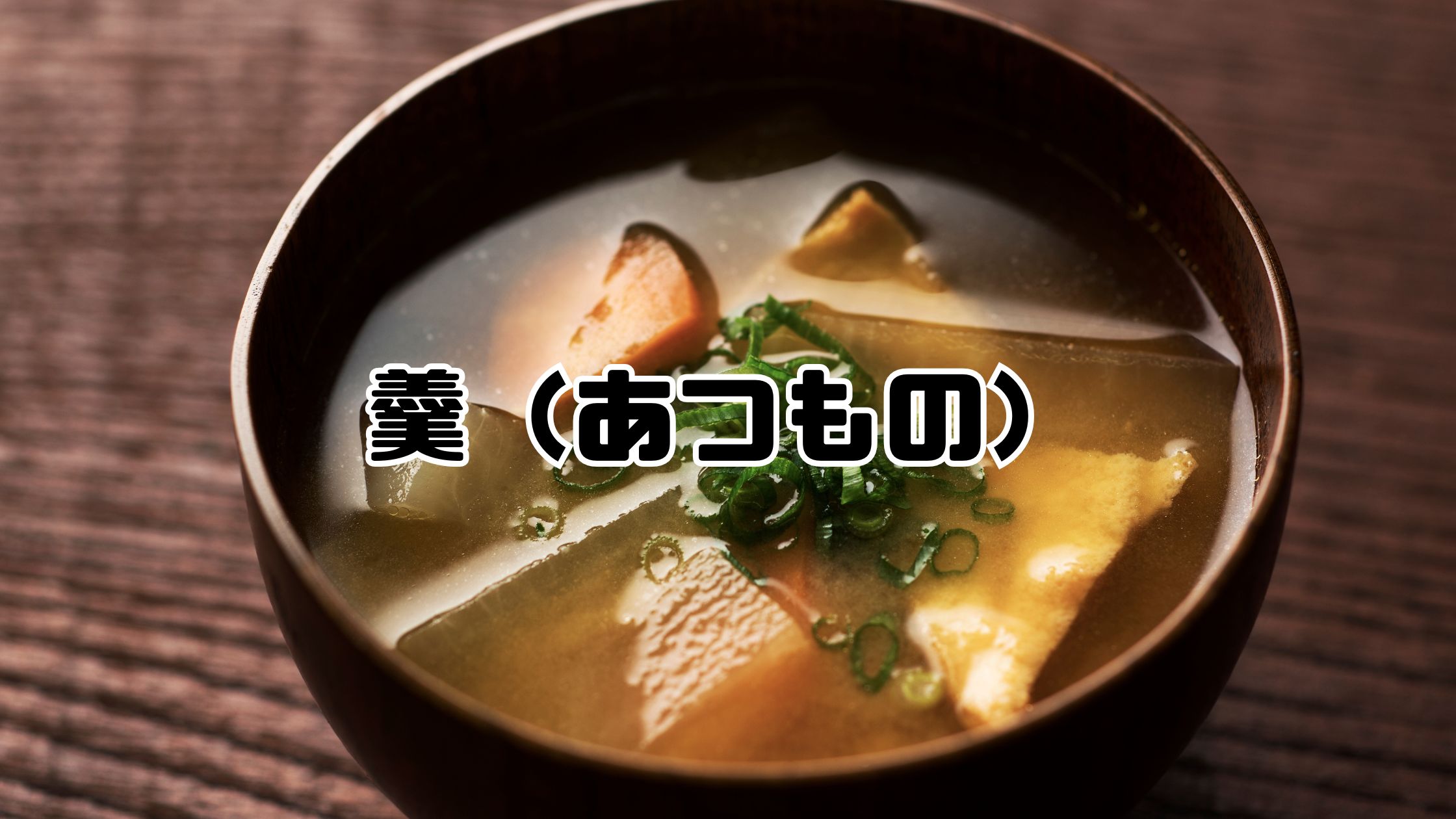
"Atsumono" (羹 / あつもの) refers to a thick, hearty Japanese broth prepared by simmering meats, fish, or seasonal vegetables. Principally used as a specialized culinary term in high-end traditional Japanese dining (Washoku) and course-based banquet menus (Kaiseki), it is characterized by having a higher volume of ingredients and a thicker consistency compared to standard clear soups ("Suimono").
Linguistic and Historical Origins of Atsumono
The Chinese character "羹" historically represented a thick, slow-simmered meat and vegetable stew in ancient Chinese culinary arts. The Japanese reading "atsumono" is etymologically derived from "atsui mono" (熱いもの), which translates literally to "hot food," reflecting its traditional role as a deeply warming starter.
Core Technical Features of Atsumono
- Rich Ingredients: Combines premium seasonal seafood, proteins, and root vegetables to construct complex flavor profiles.
- Starch Thickening: Thickened using Kudzu starch (葛粉 - Kuzuko) or potato starch (片栗粉 - Katakuriko) to create a smooth, velvety mouthfeel.
- Temperature Control: Consistently served piping hot to enhance delicate umami aromas.
- Elegant Presentation: Natively served in individual, high-grade lacquered bowls with lids to preserve the heat and capture aromas.
Famous Traditional Examples of Atsumono
- Kabura-mushi (かぶら蒸し): A winter delicacy featuring grated turnip folded with egg whites, steamed over sea bream or lily bulbs, and finished with a thick dashi glaze.
- Yanagawa Nabe (柳川鍋): A hot pot dish combining loach or eel, julienned burdock root, and green onions, simmered in a sweet soy dashi and bound with beaten egg.
- Tai no Ara-daki (鯛のあら炊き): A robust dish utilizing sea bream collars and bones simmered with root vegetables in a concentrated sake-soy reduction.
- Yoshino-jiru / Kuzu-shitate (吉野汁/葛仕立て): A hearty, multi-ingredient soup thickened specifically with Kudzu powder from Nara's famous Yoshino region, imparting a beautiful translucent sheen.
- Ebi-shinjo no Ankake (海老しんじょうのあんかけ): Delicate, fluffy steamed shrimp dumplings draped in a rich, thickened savory broth.
Practical Culinary Usage Examples of the Term "Atsumono"
- "Today's Atsumono course is a steamed sea bream Kabura-mushi."
Used when explaining the daily hot broth selection on a high-end Kaiseki menu. - "What style of Atsumono is scheduled for this evening's course menu?"
Used by servers or discerning guests inquiring about the hot soup component of a banquet. - "For the next course, we have prepared a warming, thickened Atsumono."
Used when announcing transitions to the hot soup course during formal dinner service. - "This Atsumono exhibits an exceptionally deep, clear dashi extraction."
Used by culinary critics or guests when praising the quality of the soup's base broth. - "Chef, please test the seasoning balance on the Atsumono before service begins."
Used in professional kitchens to direct the final tasting check on the thickened broth.
Structural Differences Between Atsumono and Suimono
While both represent standard Japanese soup categories, they differ significantly in design:
- Starch Thickening:
Atsumono is characterized by a thick, velvety consistency using Kudzu or potato starch. Suimono (吸い物) is a crystal-clear, unthickened dashi broth. - Ingredient Density:
Atsumono contains substantial, multi-layered ingredients designed to be eaten as a main component. Suimono focuses on minimalism, containing simple, light ingredients designed to cleanse the palate. - Culinary Weight:
Atsumono commands a larger, more filling presence in a multi-course meal, whereas Suimono acts as a delicate palate cleanser between heavier courses.
Differences Between Atsumono and Other Soup Styles
- Standard Soups (汁物 - Shirumono): The broad category for all daily Japanese soups, including homestyle miso soup or Zoni, utilizing diverse broths and cooking styles.
- Hot Pot (鍋物 - Nabemono): Large-scale communal stews prepared and shared from a central pot at the dining table, whereas Atsumono is individually plated in separate lidded bowls.
- Simmered Dishes (煮物 - Nimono): Slow-cooked dishes where the sauce is reduced until it is absorbed by the ingredients, whereas Atsumono is primarily a soup designed for enjoying the rich, thickened broth.
Typically featuring rich seasonal ingredients draped in a velvety Kudzu dashi glaze, it acts as a luxurious, comfort-focused course during colder months.
Because of its formal history and association with refined banquet dining, mastering the balance of Atsumono is a key milestone for traditional chefs.
I hope this historical and technical breakdown helps you navigate and appreciate the subtle structures of high-end Japanese dining!
About "Atsumono (羹 - Traditional Japanese Thick Broth, Culinary Etymology, and Kaiseki Seasoning Design)"
This page provides the English definition and usage guide for the professional term "Atsumono (羹 - Traditional Japanese Thick Broth, Culinary Etymology, and Kaiseki Seasoning Design)." If you have any suggestions, feedback, or corrections regarding our terminology articles, please feel free to reach out via our contact form.