Ehomaki (恵方巻き - Lucky Direction Sushi Rolls, Setsubun Traditions, Symbolic Ingredients, and Modern Food Waste Debates)
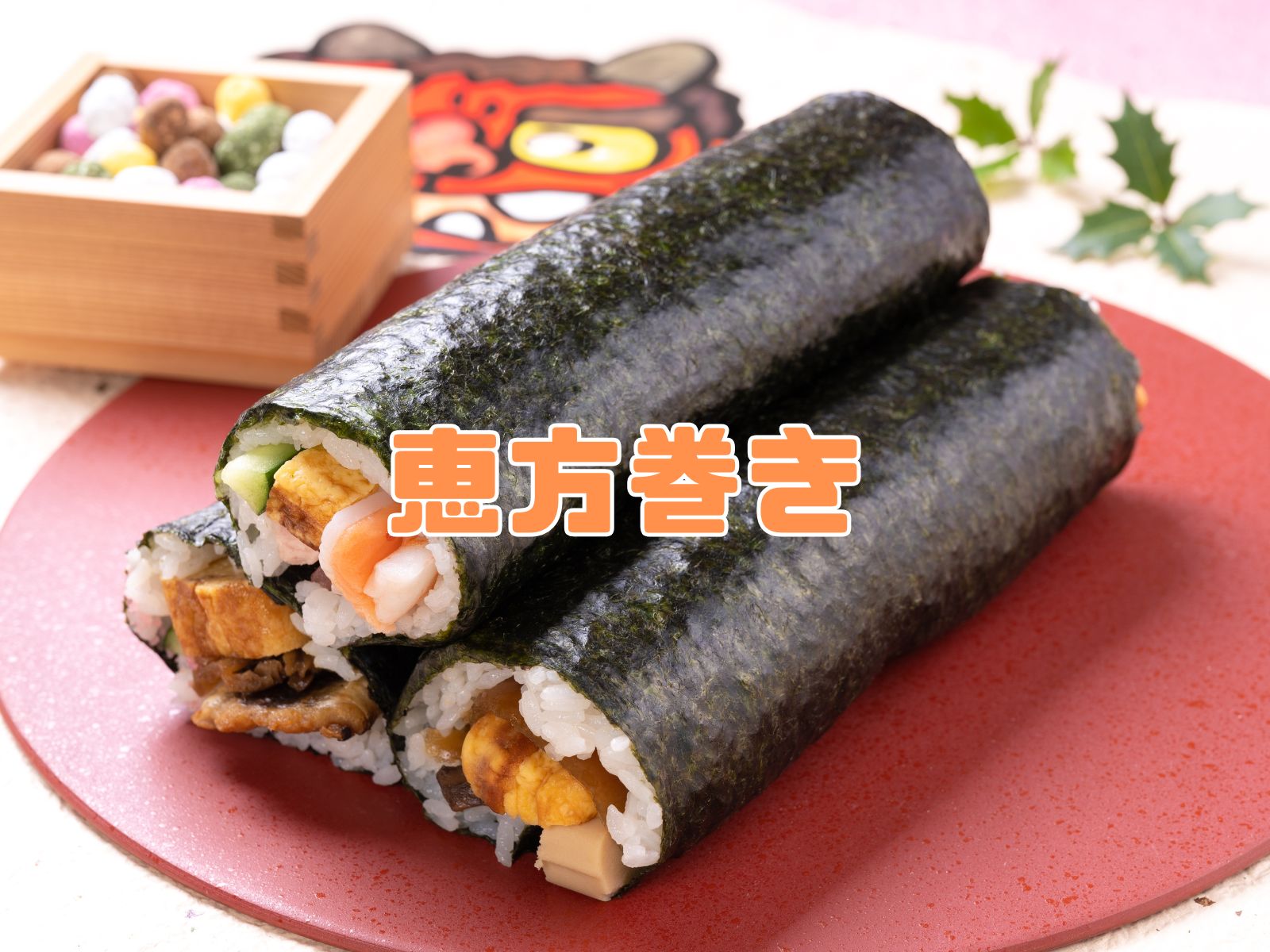
"Ehomaki" (恵方巻き - Eho-maki) is a traditional Japanese culinary custom celebrated during the Setsubun festival, where individuals eat a whole, uncut thick sushi roll (futomaki) while facing the designated lucky direction of the year (Eho) to invite good fortune, health, and prosperity.
Calculated annually based on the principles of Onmyodo (traditional Japanese cosmology), the lucky direction changes every year.
While the exact historical origins of Ehomaki remain a subject of debate among cultural historians, a prominent theory suggests it began during the late Edo to early Meiji periods within the merchant districts of Semba in Osaka. Merchants celebrated the end of winter and prayed for business success by consuming thick sushi rolls, then referred to simply as "Marukaburi-zushi" (whole-bite sushi) or "Futomaki-zushi."
The Timing and Celestial Alignment of Ehomaki
Ehomaki is consumed exclusively on the night of Setsubun (the eve of the first day of spring).
Historically, the term Setsubun marked the transition eve before the start of each of the four seasons (立春, 立夏, 立秋, 立冬). Over time, the eve before Risshun (the beginning of spring) was deemed the most critical, effectively serving as the traditional Japanese lunar New Year's Eve. Consequently, Setsubun is celebrated on February 3rd. However, in astronomical transition years—such as 2025—Setsubun shifts to February 2nd.
The lucky direction (Eho) is defined as the specific compass direction presided over by Toshitoku-jin (歳徳神), the deity of fortune and year-virtue, who is said to bring blessings, joy, and success. In ancient Onmyodo cosmology, Toshitoku-jin is represented as a beautiful goddess. The direction is determined using the Ten Heavenly Stems of the year, rotating through four main points. For instance, the lucky direction for the year 2025 is West-Southwest (西南西).
Historically, this lucky direction was referenced not only for consuming sushi but also for choosing the direction of travel for New Year's shrine visits (Eho-mairi) and launching new business ventures.
The Seven Symbolic Ingredients and Their Meanings
To align with the Seven Lucky Gods (Shichifukujin) of Japanese folklore, a traditional Ehomaki is rolled using exactly seven distinct ingredients.
Each ingredient is chosen for its specific symbolic meaning to guarantee a year of comprehensive fortune:
| Traditional Ingredient | Symbolic Blessing | Cultural and Folkloric Derivation |
|---|---|---|
| Kampyo (Dried Gourd Strips) | Wealth and Harmonious Connections | Associated with Benzaiten; its long shape symbolizes long life and strong relationships. |
| Cucumber (Kyuri) | Business Prosperity | A wordplay on "Kyuri" (九利), which translates homophobically to "nine-fold benefits." |
| Shiitake Mushrooms | Robust Health and Open Future | The round umbrella shape of the mushroom cap represents opening the path to future success. |
| Shrimp (Ebi) | Longevity | The curved body and long feelers of the shrimp symbolize living a long life until one's back bends. |
| Anago or Unagi (Eel) | Career Advancement and Success | Inspired by the eel's powerful upward swimming motion, representing ascending corporate ranks. |
| Dashimaki Tamago (Rolled Egg) | Financial Abundance | The bright golden color of the egg represents wealth and gold bars. |
| Sakura Denbu (Sweet Fish Flakes) | Protection and Growth | The bright pink color serves as a traditional talisman to ward off evil spirits. |
Furthermore, the seven ingredients correspond to the blessings of each of the Seven Lucky Gods:
| Deity | Blessing Offered |
|---|---|
| Ebisu (恵比寿) | Commercial success, abundance of food, and wealth |
| Daikokuten (大黒天) | Agricultural abundance, household safety, and fortune |
| Bishamonten (毘沙門天) | Victory in challenges, defense against evil, and career growth |
| Jurojin (寿老人) | Longevity, health, and peaceful aging |
| Hotei (布袋様) | Good fortune, domestic happiness, and contentment |
| Fukurokuju (福禄寿) | Wisdom, long life, and wealth |
| Benzaiten (弁財天) | Artistic talent, academic success, music, and wealth |
The Three Golden Rules of Eating Ehomaki
To ensure that the blessings of Toshitoku-jin are received, individuals must adhere strictly to three traditional rules:
- 1. Face the Lucky Direction (Eho):
Keep your eyes focused strictly on the designated lucky direction of the year throughout the meal, keeping your mind focused on your wishes. - 2. Eat in Absolute Silence:
Do not speak a single word until the entire roll has been completely consumed. It is believed that speaking aloud mid-meal allows your good fortune to escape. - 3. Consume the Roll Whole (Uncut):
Do not cut the roll with a knife. Eating the roll in its continuous, whole state symbolizes preserving relationships and ensuring that your family's line of fortune is never severed.
Historical Evolution and Commercialization
The historical transition of Ehomaki from a localized Osaka merchant custom to a nationwide phenomenon is a fascinating study in marketing. In the late 1970s and 1980s, the Osaka Nori Association launched aggressive promotional campaigns linking seaweed consumption with Setsubun. The decisive nationwide breakthrough occurred in 1998, when 7-Eleven introduced the rolls under the official name "Ehomaki" to the Kanto region, sparking a massive boom that led convenience stores and supermarkets across Japan to adopt the product.
Regional Customary Variations
While Ehomaki has become a universal national custom, regional variations in preparation and eating etiquette still exist:
- Kansai Region (Western Japan):
As the birthplace of the tradition, Kansai maintains the most rigorous attachment to eating the roll whole in absolute silence. - Kanto Region (Eastern Japan):
Adopting the custom much later, Kanto consumers are far more flexible, often using modern seafood-centric ingredients like raw tuna, salmon, and avocado. - Other Prefectures:
In some regions, the influence of Sengoku-era samurai customs persists, where families prefer to slice the roll into neat sections before eating, to avoid choking. Other regions prepare ultra-thick rolls containing up to 10 or 12 different premium ingredients.
Step-by-Step Homemade Ehomaki Recipe
Preparing your own custom Ehomaki at home is a highly engaging activity for families. The basic elements are Nori seaweed sheets, seasoned sushi rice (sumeshi), and your choice of seven ingredients.
Basic Preparation Steps:
- Lay a sheet of Nori seaweed on a bamboo rolling mat (makisu), spreading the seasoned sushi rice evenly across the surface while leaving a 2 cm border at the far edge.
- Arrange your seven chosen ingredients horizontally across the center of the rice.
- Using the bamboo mat, roll the Nori forward firmly, applying gentle pressure to ensure a tight, uniform cylinder.
- Place the roll seam-side down on a board, allowing the moisture from the rice to seal the Nori perfectly.
- Wipe the roll clean, and serve whole, facing the year's lucky direction.
Modern Trends and the Food Waste Controversy
As a highly commercialized commodity, Ehomaki has evolved rapidly, giving rise to several modern trends:
- Ultra-Premium Formats:
Moving beyond simple ingredients, high-end department stores offer luxury rolls featuring Matsusaka beef, premium crab, sea urchin, and edible gold leaf. - Creative Variations:
Stores actively sell localized variations, including Korean-style Kimbap rolls, California salad rolls, and sweet dessert roll cakes. - Prioritizing Portion Control:
To prevent overeating, supermarkets offer half-sized or bite-sized rolls tailored to single-person households and children. - The Food Waste (Food Loss) Debate:
In recent years, the excessive production and subsequent mass disposal of unsold Ehomaki on the night of Setsubun has drawn major national criticism. In response, the Ministry of Agriculture, Forestry and Fisheries has pushed convenience stores to adopt strict reservation-only ordering systems and utilize AI demand forecasting to eliminate waste.
Summary
Ehomaki represents a fascinating fusion of ancient astronomical beliefs, traditional gastronomy, and modern commercial marketing. Consuming this symbolic sushi roll whole in absolute silence toward the lucky direction remains a beloved, highly interactive ritual that connects modern Japanese families with their rich cultural heritage.
By addressing modern challenges like food waste and celebrating creative variations, this seasonal custom continues to evolve, proving that traditional culinary heritages can remain vibrant, relevant, and highly cherished in a modern globalized society.
About "Ehomaki (恵方巻き - Lucky Direction Sushi Rolls, Setsubun Traditions, Symbolic Ingredients, and Modern Food Waste Debates)"
This page provides the English definition and usage guide for the professional term "Ehomaki (恵方巻き - Lucky Direction Sushi Rolls, Setsubun Traditions, Symbolic Ingredients, and Modern Food Waste Debates)." If you have any suggestions, feedback, or corrections regarding our terminology articles, please feel free to reach out via our contact form.