Harvest Moon (ハーベストムーン - Harvest Moon: The September full moon, astronomical reasons for bright nights, and comparisons with Otsukimi)
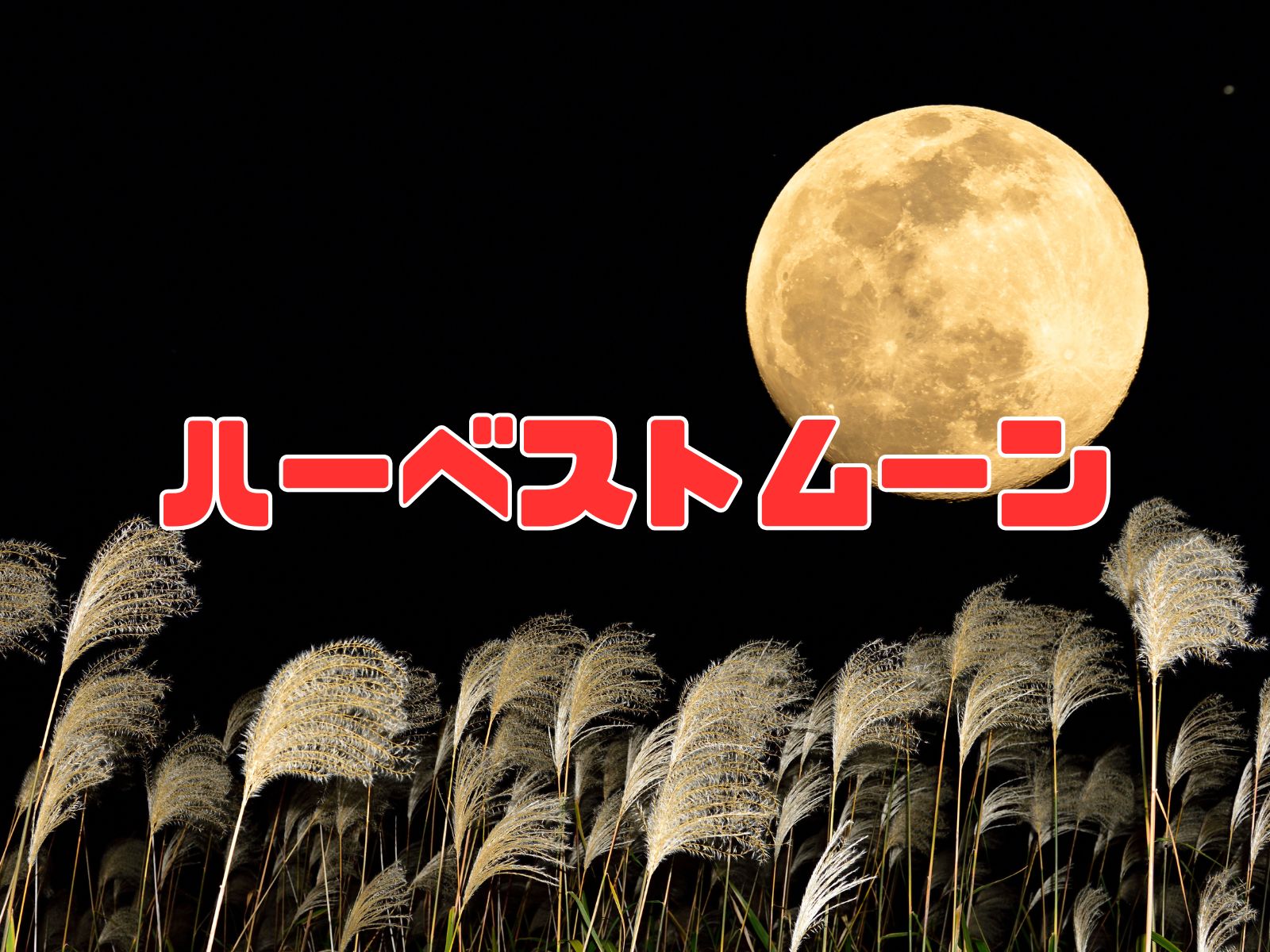
The "Harvest Moon" (ハーベストムーン) is the traditional name applied to the full moon that occurs closest to the autumnal equinox (which falls around September 23rd in the Northern Hemisphere).
Known as the "Harvest Moon" (収穫月 - Shuukaku-getsu), it is one of the most culturally celebrated full moons of the calendar year.
Etymological Origins
The name originates from Native American tribes who used lunar cycles to track seasonal harvests.
Autumn represents the peak of the agricultural harvest. Uniquely, the full moon during this season rises exceptionally early after sunset, bathing fields in powerful, bright moonlight that lasted long into the night. This extra illumination allowed farmers to continue harvesting their crops long after dark, directly driving the name "Harvest Moon."
Scientific and Astronomical Characteristics
The Harvest Moon features several distinct astronomical behaviors:
- Minimal Delay in Moonrise Times
On average, the moon rises about 50 minutes later each day. However, around the autumnal equinox, this daily delay drops significantly (often to just 20 to 30 minutes in high-latitude regions). This occurs because the angle of the moon's orbit (the ecliptic) relative to the Earth's horizon is at its shallowest during the autumn equinox. - Extended Brightness After Sunset
Because the moon rises shortly after sunset, bright, warm moonlight illuminates the evening sky almost immediately, extending the bright night hours.
Harvest Moon vs. Japan's "Chuu-shuu no Meigetsu" (Otsukimi)
In Japan, there is a time-honored tradition of viewing the "Chuu-shuu no Meigetsu" (中秋の名月 - Mid-Autumn Moon) on the 15th day of the 8th month of the traditional lunisolar calendar:
While the "Chuu-shuu no Meigetsu" is defined by traditional calendar dates and does not always align perfectly with the astronomical full moon, the "Harvest Moon" is strictly defined as the actual full moon closest to the autumn equinox.
While their calculations differ, they often fall very close to each other, allowing skywatchers in Japan to enjoy both cultural celebrations.
Astronomical Explanation of the Orbit
- Angle of the Lunar Orbit
The moon's orbit around the Earth is tilted by about 5 degrees relative to the Earth's orbit around the sun (the ecliptic). Furthermore, the Earth's axis of rotation is tilted by 23.4 degrees. This combination causes the angle between the horizon and the moon's path to fluctuate dynamically depending on the season and location. - Equinox Alignment
During the autumn equinox, especially in high-latitude countries, the moon's path runs nearly parallel to the eastern horizon. Consequently, as the Earth rotates, the moon rises significantly faster relative to the horizon, minimizing the daily moonrise delay.
Cultural and Historical Significance
- Symbol of Abundance and Harvest
Historically celebrated as a symbol of agricultural fertility and success. The extra evening light was invaluable to farming communities before the invention of modern electric lighting. - Festivals and Sacred Rituals
Intertwined with ancient harvest thanksgiving festivals, serving as a focal point for prayers, gratitude, and communal feasts. - Art and Literature Inspiration
A cherished subject across global poetry, painting, and classical literature, symbolizing the changing of seasons.
Observation Tips
- Clear Skies:
Choose a clear, cloudless autumn evening for the best viewing. - Elevated Locations:
Seek out open parks or hills away from tall urban structures and streetlights. - Watch the Moonrise:
Check local moonrise times. Watching the massive, warm-colored full moon slowly ascend past the horizon is an unforgettable sight. - Vivid Colors:
Due to atmospheric dust particles near the horizon, the Harvest Moon often displays a deep orange or warm golden hue as it rises.
Harvest Moon Calendar (2024–2030)
Below are the estimated dates for the Harvest Moon (exact dates may vary slightly based on time zones):
- 2024: September 18
- 2025: September 7
- 2026: September 26
- 2027: September 16
- 2028: September 3
- 2029: September 23
- 2030: September 12
As always, the moon will appear wonderfully circular for a few nights surrounding these precise calendar dates.
Traditional Full Moon Names by Month
- January: Wolf Moon (狼月)
- February: Snow Moon (雪月)
- March: Worm Moon (芋虫月)
- April: Pink Moon (ピンク月)
- May: Flower Moon (花月)
- June: Strawberry Moon (いちご月)
- July: Buck Moon (雄鹿月)
- August: Sturgeon Moon (チョウザメ月)
- September: Harvest Moon (収穫月)
- October: Hunter’s Moon (狩猟月)
- November: Beaver Moon (ビーバー月)
- December: Cold Moon (寒月)
About "Harvest Moon (ハーベストムーン - Harvest Moon: The September full moon, astronomical reasons for bright nights, and comparisons with Otsukimi)"
This page provides the English definition and usage guide for the professional term "Harvest Moon (ハーベストムーン - Harvest Moon: The September full moon, astronomical reasons for bright nights, and comparisons with Otsukimi)." If you have any suggestions, feedback, or corrections regarding our terminology articles, please feel free to reach out via our contact form.